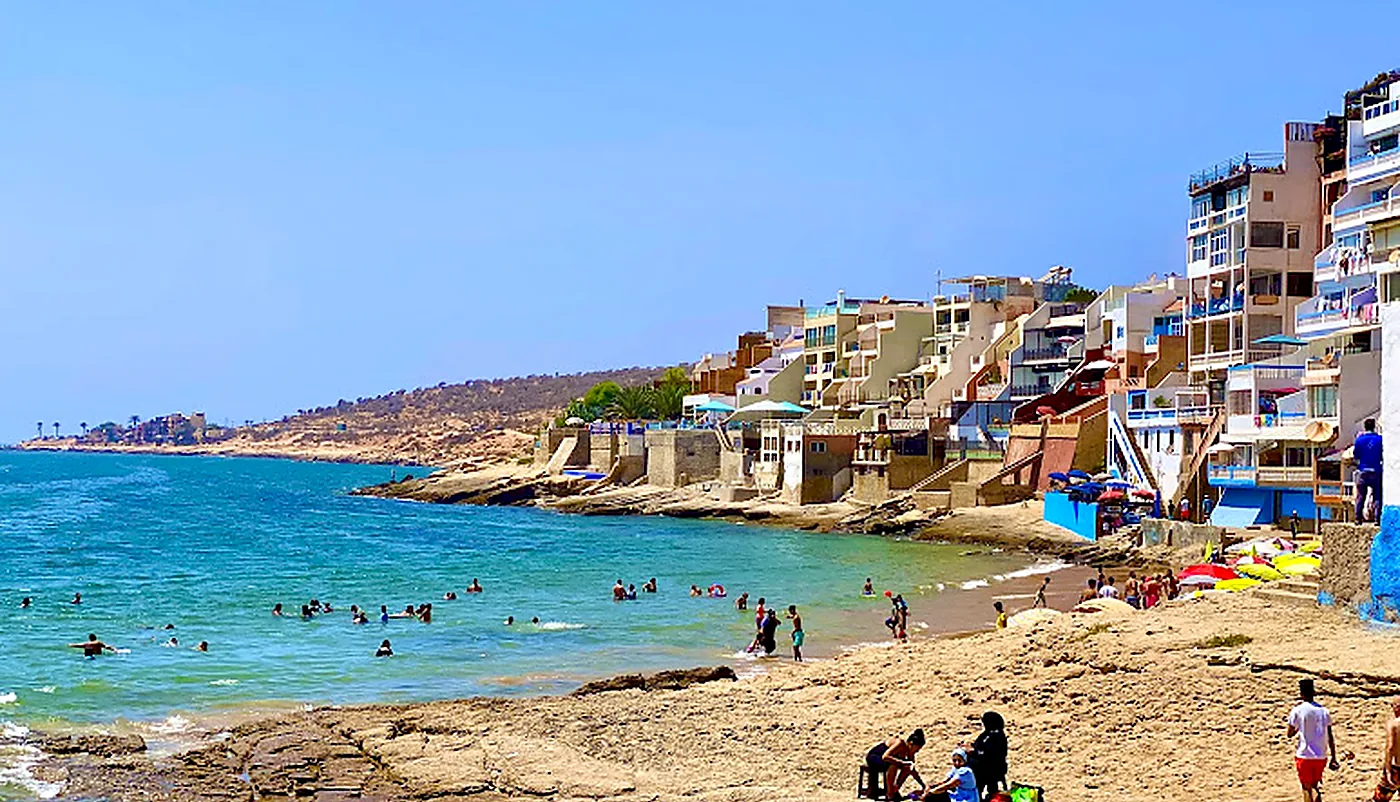
Every camp on this coast shows the same photographs of the same waves. These questions are how you tell them apart before paying a deposit.
1. How many students per instructor?
You want a number, ideally six to eight maximum, and a named certification body. A red flag is "small groups" with no figure attached, or an answer that pivots to how experienced the team is.
2. Do you change spots with conditions?
A good camp reads swell, period, direction and tide each morning and drives accordingly. The answer should name several alternative spots. If a camp goes to the same beach every day, you will learn one wave rather than learning to surf.
3. How many coached hours are included?
Not sessions, hours. Two camps a hundred euros apart can deliver ten hours or five. This is the single most useful value comparison available to you and almost nobody advertises it.
4. What is the plan if it is flat or too big?
Named alternatives for each scenario, and a reshuffled activity day. The red flag is "it is always good here." It is not always good anywhere.
5. If there is a desert leg — which desert?
A place name and a distance from the nearest road. "The Sahara" is not an answer. Erg Chebbi, Erg Chigaga, Zagora and Agafay are four different holidays.
6. What is the realistic total?
Including road lunches, entry tickets, transfers and any activity you intend to do. Headline prices are usually accurate and rarely complete.
7. What do the newest reviews say?
A high rating built over eight years can conceal a bad recent quarter. Sort by most recent rather than by score, and read the three-star reviews, which are almost always the most informative.
8. Who else will be there?
If you are travelling alone, ask what proportion of guests are solo. On camps that suit solo travellers it runs sixty to eighty percent, and it changes the entire character of the week.
Reading reviews properly
Sort by newest rather than by rating. A camp with a 4.9 built over eight years can have changed hands, changed staff or lost its head coach in the last six months, and the average will not show it for a long time.
Read the three-star reviews first. Five-star reviews tell you the place is nice; one-star reviews are often about something unrelated to the camp. Three-star reviews are written by people who had a genuinely mixed experience and took the trouble to explain which parts were good.
Look for detail that could only come from being there — an instructor's name, a specific beach, a particular meal. Generic praise is unverifiable and sometimes purchased.
Check whether the camp replies to criticism, and how. A defensive reply to a fair complaint tells you exactly how a problem during your stay would be handled.
Red flags in the booking conversation
Full payment demanded up front. A deposit is standard; the whole sum before you arrive is not.
No written terms. If cancellation conditions exist only in a WhatsApp message, they do not really exist.
Vague answers to specific questions. If you ask about instructor ratios and get a paragraph about how much everyone loves the team, ask again. Twice.
Photographs that do not match the description. Sunset shots of a dune sea on a page selling a rocky desert an hour from Marrakech, or a private room pictured beside a dormitory price.
Pressure. "Only two spots left" on a page that has said the same thing for a month.
Green flags most people miss
A camp that tells you not to book something. An operator who says your dates are wrong for what you want, or that four nights is too short for a desert leg, is giving away revenue for your benefit and that is a strong signal.
Published driving hours, ratios and inclusions rather than adjectives.
Named staff with real roles. Anonymous "expert instructors" is a phrase, not a team.
A clear statement of what happens when conditions are bad, before you ask.
Local ownership and long-term local staff. Both correlate strongly with knowing where the waves actually are on a given morning.
Matching the camp to yourself, not to the photographs
Party camps and quiet camps look identical in photographs and produce completely different weeks. Ask directly what the evenings are like and whether alcohol is part of them.
Ask the average age and the proportion of solo travellers. A camp that is mostly couples in their forties and a camp that is mostly solo travellers in their twenties are both good, for different people.
Ask what happens for a non-surfing partner, if you have one. If the answer is thin, the week will be too.
And ask what they are not good at. An operator who answers that question honestly is telling you more about the week than everything else on their website combined.
Instructor qualifications, and what they mean
ISA is the International Surfing Association, whose Level 1 and Level 2 coaching awards are the most widely recognised standard. Level 1 covers beginner instruction in controlled conditions; Level 2 covers intermediate coaching and greater independence.
A separate water safety or lifesaving qualification matters at least as much, and good camps hold both. Ask whether at least one person in the water holds a current lifesaving certificate.
Local knowledge is not a qualification and is not a substitute for one, but it is not worth less either. A coach who has surfed this coast for fifteen years knows things no certificate contains. The combination is what you want.
Be sceptical of "certified" with no body named. It is a word anybody can print.
Comparing three shortlisted camps
Build a table. Rows: price, nights, room type, meals per day, coached hours, instructor ratio, transfers included, activities included, deposit, cancellation terms, response time to your first email.
That last row is more predictive than people expect. An operator who answers a detailed question thoroughly within a day behaves the same way when your flight is delayed or the swell disappears.
Then divide price by coached hours and see whether the ranking changes. It usually does, and usually not in favour of the cheapest.
Finally, read the newest reviews of all three on the same afternoon so you are comparing like with like rather than remembering an impression from last week.
Booking, and protecting yourself
Get the key facts in writing before paying: dates, room type, what is included, the total, the deposit, and the cancellation terms. A WhatsApp message is fine as long as it is specific; a phone call is not.
Pay the deposit by a traceable method. Keep the confirmation.
Take insurance that covers cancellation as well as surfing, particularly for peak weeks booked months ahead on non-refundable flights.
And re-confirm about a week before you travel with your flight number and arrival time. It is a small courtesy that prevents the most common arrival problem there is.
The shortlist test
Send the same five questions to three camps and compare the replies rather than the websites. How many students per instructor? How many coached hours in the week? What is the all-in total including everything I have described? What happens if it is flat or too big? And what are you not good at?
The last question is the most revealing and the one almost nobody asks. An operator who answers it honestly — we are not the right camp for families, our rooms are basic, our village is quiet in the evenings — is telling you they would rather have the right guest than any guest.
Read the newest reviews of all three the same afternoon. Check that all three publish written cancellation terms. Then divide price by coached hours.
That process takes about an hour and it is the hour that determines whether the week is the one you hoped for. It is a considerably better use of your time than a fourth evening comparing photographs of terraces, which all look the same and tell you nothing.