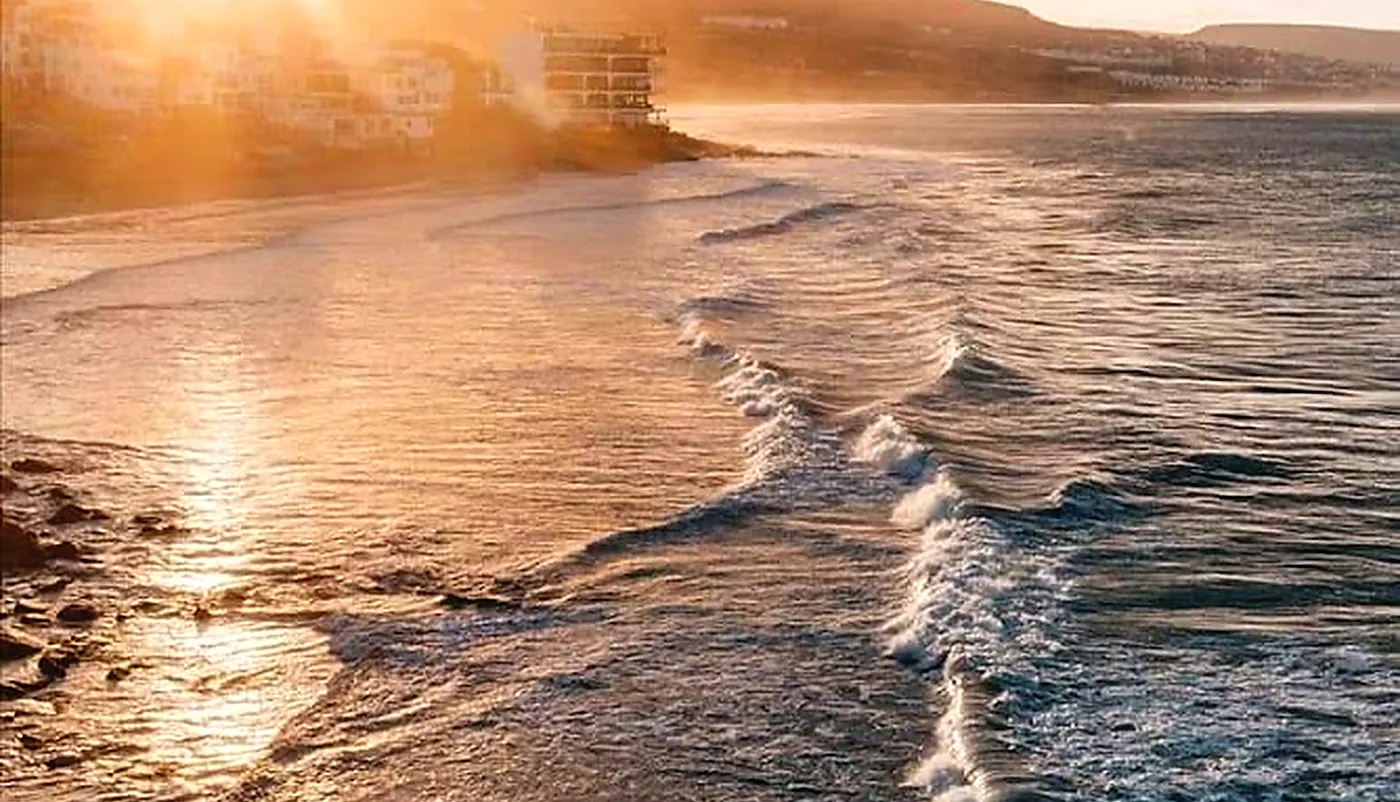
Winter is when this coast does what it is famous for. It is also when the water is coldest, the points are busiest and the desert nights approach freezing. All of that is manageable and worth planning for.
Why the waves arrive in winter
Deep low-pressure systems form in the North Atlantic through the winter months and send swell south. By the time it reaches this latitude it has travelled thousands of kilometres, which organises it into long-period lines rather than disordered chop.
Long period is what makes the points work. The famous right-handers here need real energy to wrap around their headlands and peel properly, and that energy only arrives consistently between roughly November and March.
The same systems that light up Ireland and Portugal reach Morocco a day or two later, smaller but cleaner. That delay is useful — you can watch a swell move down the Atlantic and know roughly when it will arrive.
What each winter month is like
November: swell arrives properly, air still warm at 21 to 25 °C, crowds thinner than December, and the desert is at its most comfortable. Arguably the best all-round month of the year.
December: bigger and more consistent, cooler air, and prices spike sharply over Christmas and New Year. The two weeks either side of those dates are excellent value and much quieter.
January: often the biggest, cleanest swell of the year. Coldest water, coldest desert nights, and a serious month at the points.
February: similar to January with slightly kinder nights and a noticeable increase in visitors from northern Europe escaping winter.
The water, and dressing for it
Sea temperature sits around 17 to 19 °C through winter. That is comfortable in a 3/2 mm full suit for about ninety minutes, after which your hands get clumsy and your pop-up starts to suffer.
A 4/3 is a legitimate request if you feel the cold, and any decent camp carries a range of thicknesses.
The thing that actually makes people cold is not the water, it is the wind on a wet suit between the water and the vehicle. A hooded changing robe is the best €60 you can spend on a winter surf trip here and it makes more difference than a thicker wetsuit.
Booties are worth it if you are surfing the rocky points regularly, less so on the sandy bays.
Winter crowds, and how to work around them
Winter is high season for experienced surfers, and the famous points get busy. Anchor Point on a good January swell has a dense, skilled lineup and priority is enforced firmly.
The workarounds are the same as anywhere: go at dawn, go where the walk is longer, and surf the unfashionable spots between the famous names. Killers thins its crowd with a twenty-minute paddle; K11, K12 and the beaches south of Banana Point are frequently empty.
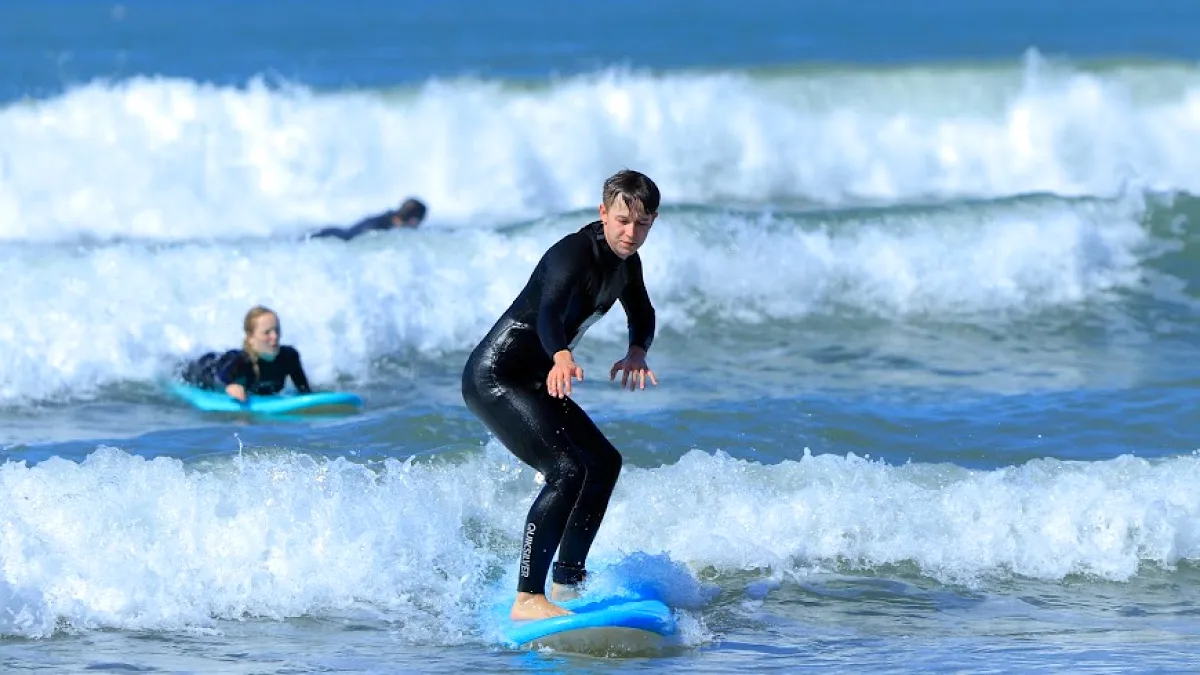
For beginners, winter crowds are largely irrelevant. The learning bays stay quiet and the schools spread out along them.
Beginners in winter: yes or no?
Yes, with a caveat. The sandy bays remain workable through most of the winter and the coaching is often better, because instructors are surfing daily in good conditions themselves.
The caveat is that on big swells the beginner spots can close out, and a week in January might contain a day or two where the plan changes. A camp with vehicles and knowledge of the whole coast handles that; a camp that walks to one beach does not.
If you are a complete beginner with fixed dates and no flexibility, October, November, March and April are gentler. If you have flexibility, winter is fine and the coast is at its most alive.
Christmas, New Year and pricing
The two weeks spanning Christmas and New Year are the most expensive and most booked-out of the year on this coast. Camps fill three to four months ahead and prices carry a real premium.
Early December and mid-January are the value windows: same swell patterns, considerably lower prices, and noticeably fewer people.
If you are set on the holiday period, book by September. Availability, not price, is what runs out.
Adding a desert trip in winter
Winter is a good time for the Sahara by day — 18 to 22 °C, clear, dry and comfortable for walking dunes. The nights are the issue: temperatures at Erg Chebbi approach freezing in December and January.
Camps provide heavy blankets and it is genuinely fine, provided you bring a warm jacket, a mid-layer, socks and a hat. Guests who pack for a desert and forget the cold have a poor night.
The compensation is the sky. Winter air is dry and clear, Orion sits high at this latitude, and a moonless winter night in the erg is as good as stargazing gets anywhere.
Rain, storms and what happens then
It rains here in winter, occasionally heavily, and it passes quickly. A wet day is unusual rather than routine, and even in January most days are sunny.
What rain does affect is water quality near river mouths for a day or two afterwards, and inland roads in the mountains and gorges, where flash flooding is a real phenomenon. Take that seriously if a guide changes a plan.
Storm swell can also arrive too big and too disorganised to surf. Those days are for watching the points from a headland, which is a genuinely good use of an afternoon and teaches you more about waves than a bad session would.
Packing specifically for a winter trip
A hooded changing robe or at minimum a thick poncho towel. A warm jacket and a mid-layer. A beanie for early mornings and desert nights. Socks, which people forget entirely.
Everything from the standard list still applies — sun cream especially, because winter sun on the Atlantic still burns and the wind hides it completely.
And a second pair of shoes. Wet shoes in winter stay wet, and one dry pair is worth the luggage space.
Is winter the right season for you?
If you already surf and want the best waves of the year: yes, without hesitation. November through February is why experienced surfers book Morocco.
If you are learning and have flexible dates: October, November, March or April give you the same coast with gentler conditions and warmer water.
If you are combining surf with the Sahara: November and March are the sweet spots, with December and January entirely workable if you pack properly.
And whatever the month, the coast has something breaking. That is the real argument for this stretch of Morocco — with sixteen spots across twenty-five kilometres and different exposures, there is almost always somewhere worth driving to.
A winter week, day by day
What a good January week actually looks like, based on how these weeks tend to run.
Monday: a moderate swell, 1.2 m at 11 seconds. Sandy bays, two clean sessions, everybody surfs.
Tuesday: building, 1.6 m at 13 seconds. Beginners at the bays in the morning; anyone competent at a smaller point in the afternoon.
Wednesday: a solid pulse arrives overnight, 2.2 m at 15 seconds, easterly offshore. The points fire. This is the day people book Morocco in winter for. Beginners get a short session somewhere sheltered and then go and watch Anchor from the headland, which is worth more than a bad session.
Thursday: still large but disorganised. Rest day. Hammam, market, valley.
Friday: easing to 1.7 m at 13 seconds. The best all-round day of the week for improvers.
Saturday: 1.3 m at 11 seconds, light wind. Long relaxed sessions, everybody tired and happy.
Sunday: whatever arrives. Often the quietest lineup of the week.
Five surfable days out of seven with one genuinely exceptional day is a normal winter week here, and that ratio is why the season has the reputation it does.