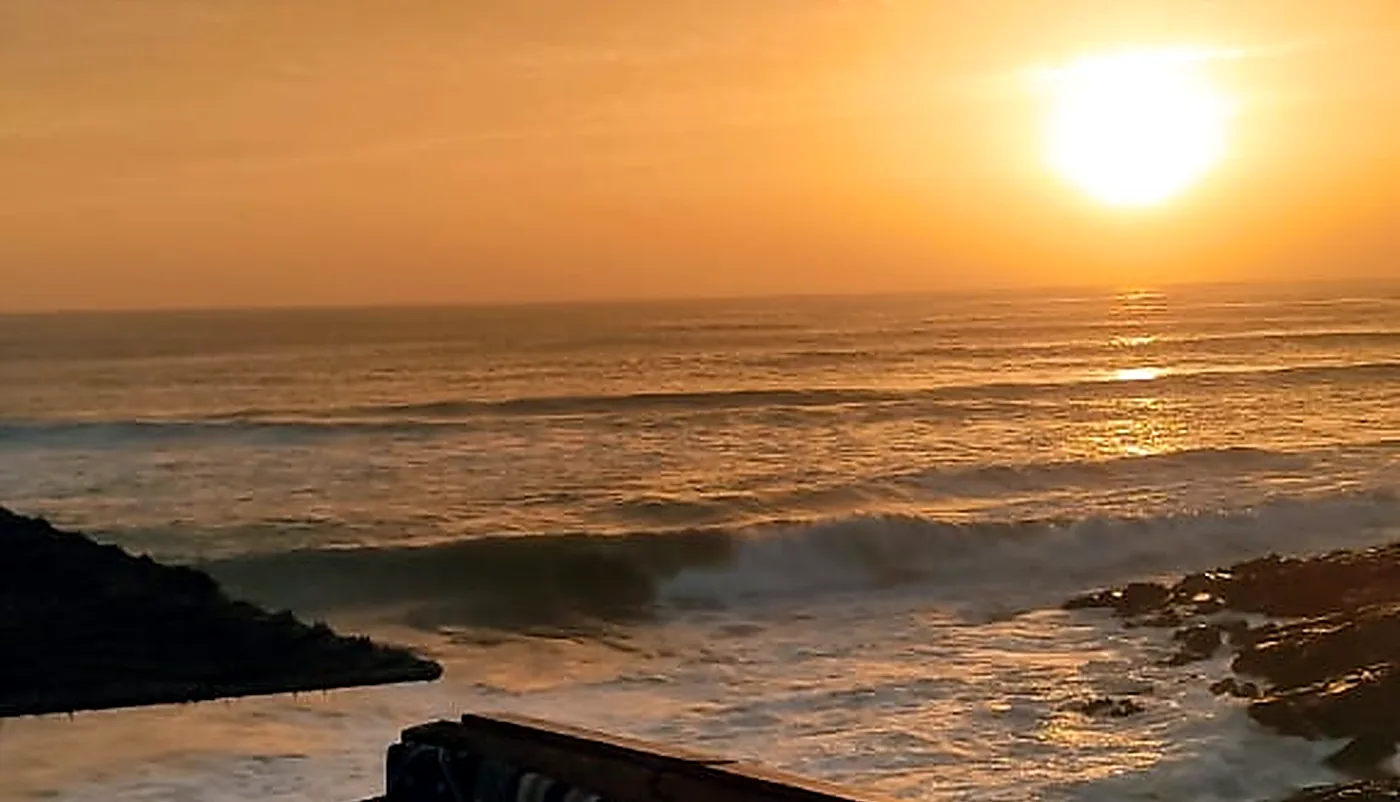
Anchor Point put Morocco on the surf map in the 1960s and remains the reason a lot of experienced surfers book January flights to Agadir.
The wave
A long right-hander wrapping around a perfectly angled headland, capable of peeling for well over a kilometre on the right swell. On big days it links section after section, and the paddle back up the point becomes serious work.
It needs real size to switch on — commonly given as four feet and upwards — and holds far larger swell than almost anything else in the region. The best days come from deep North Atlantic lows in December, January and February.
The older names
The headland carried other names long before surfers arrived. It appears in surf literature as Ikhflout in the local Amazigh tongue and Madraba in Arabic, and older accounts record further local names for the point.
An honest warning
This is not a wave to learn on and not a wave to paddle out at because you are curious. The takeoff is over reef, the crowd is dense and skilled, and a beginner in that lineup is a hazard to themselves and everyone else.
Camps do not bring students here. If you are surfing at a level where Anchor is realistic, you already know it.
The crowd
On a good swell it is among the busiest waves in Morocco, with locals, long-stay travellers and visiting professionals on the same peak. Priority is enforced socially and firmly. Sit wide, wait, do not paddle inside people.
Watching instead
On a big day the walk along the point is one of the best free shows in Morocco. Guides often walk groups up when the swell is too large to surf — an hour of that teaches more about reading waves than a week of lessons.