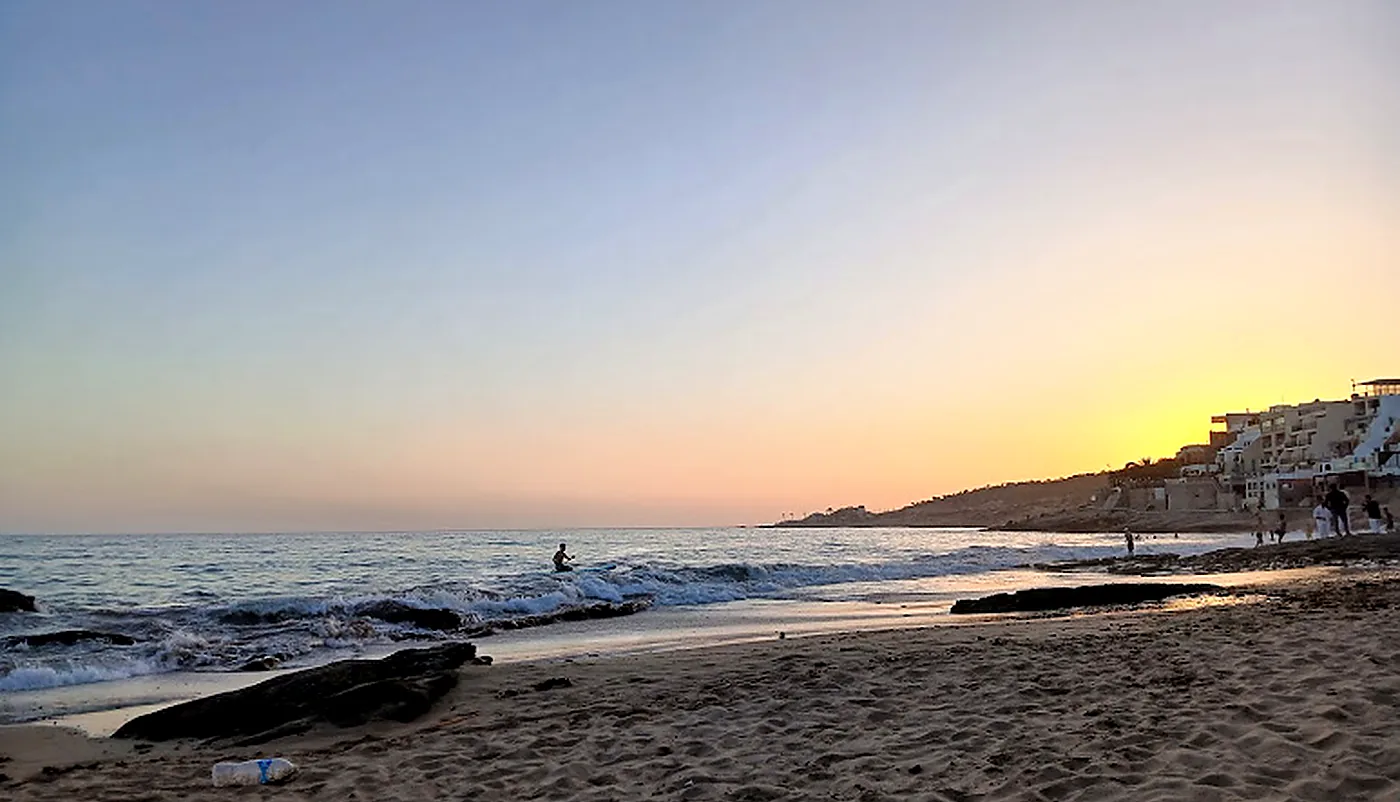
Banana Point is the home break for both villages and the reason so many surf schools are based here. It is really two waves: a long right off the headland, and a forgiving beach section beside it.
The two halves of the spot
The point is a right-hander running from the headland down towards the mouth of the Oued Tamraght. On the right swell it produces long, friendly lines that longboarders love — a small-scale version of the famous points further north, with the same useful shelter from northerly wind.
Inside that, along the sand, it breaks as a mellow beach break. That is where lessons happen. Beginners work the beach section while more confident surfers sit up the point, so one spot serves an entire mixed-ability group.
The bottom, accurately
Sand and cobblestones rather than pure sand. It is forgiving and it is not a completely soft landing everywhere, which is worth knowing before you assume you can fall anywhere without consequence.
The headland itself is rock. Park above it and walk down to the beach.
Tides
It works across the tide, which is unusual on this coast and another reason schools rely on it. Surfline lists it as working at both low and high; some local guides prefer a low, rising tide for the point section.
Local instructors check it each morning rather than assuming, because the banks near the rivermouth move after winter rains and that changes which part is working.
The name
Aourir is nicknamed Banana Village after the plantations filling the coastal valley behind it, fed by water coming down from the Atlas. Roadside stalls sell the small sweet local bananas along the coast road, and the break took its name from them.
You will also see this spot written as Banana Beach. Same stretch of coast.
Practical notes
Water is generally clean but can turn murky after heavy rain, because the rivermouth drains into the bay. The village behind is known for its tagine places, which makes it easy to build a morning around.