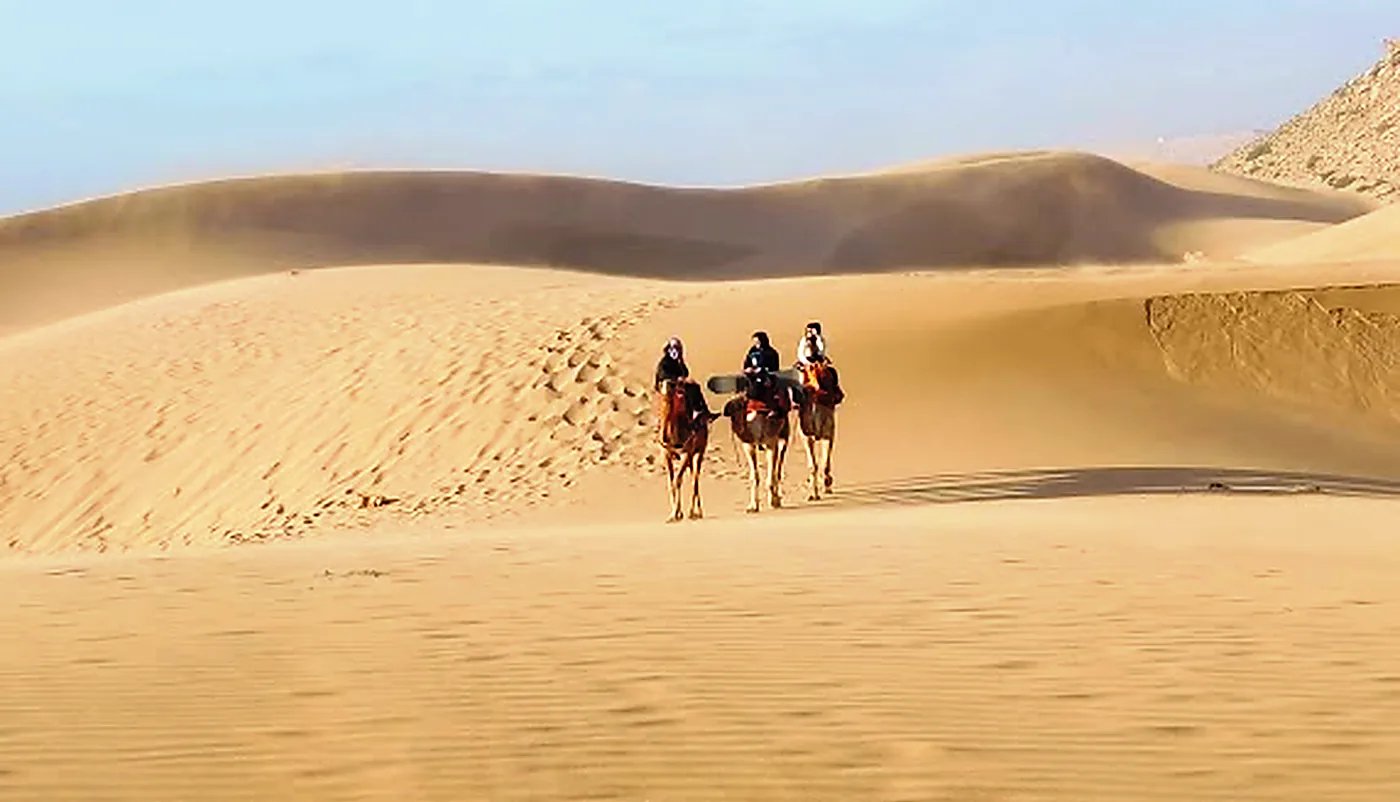
Agadir Al Massira sits about 35 kilometres from the surf villages. Here are the realistic options for covering that last stretch.
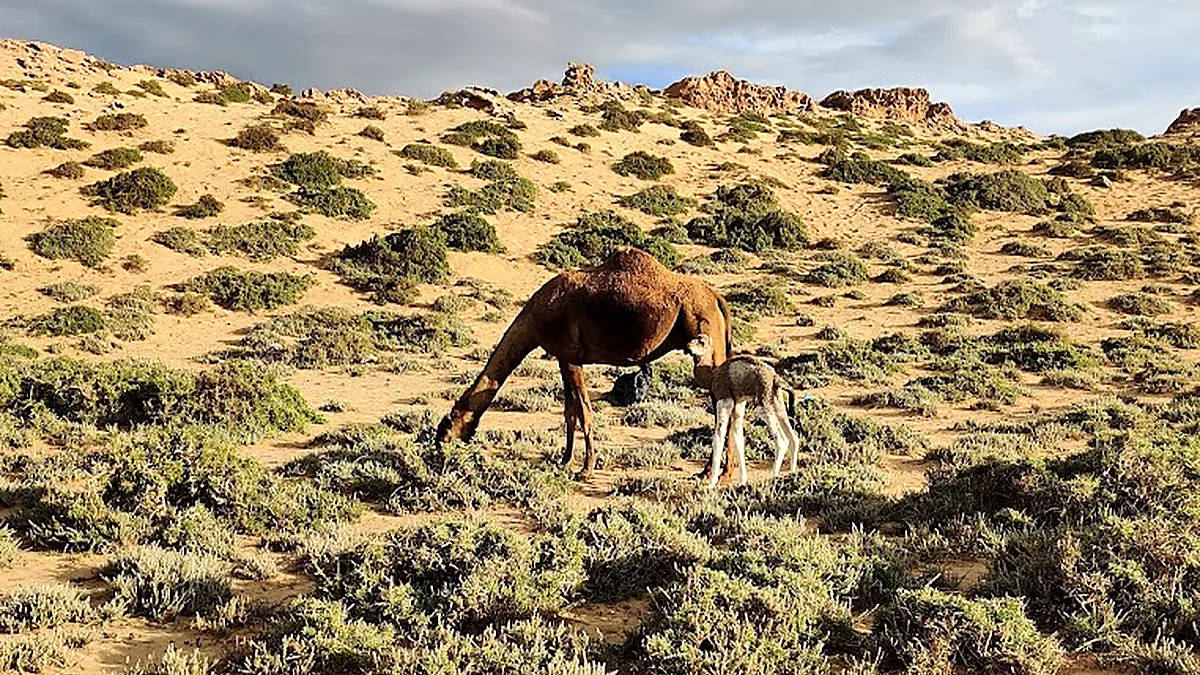
Pre-booked transfer
The simplest option and what most camps arrange. Expect €25 to €35 per car each way, which splits well between guests arriving on the same flight. Your driver waits in arrivals with a name board, which matters if you land at two in the morning on a budget flight.
Book it in advance rather than on arrival — the airport taxi rank is a worse deal and a longer negotiation after a flight.
Airport taxi
Available on arrival, and priced accordingly. Agree the fare before you get in, not after. Expect to pay more than a pre-booked transfer, and expect a firmer negotiation than you might be used to.
Public transport
Cheapest and slowest. A bus into Agadir followed by a local bus or shared taxi north to Aourir and Tamraght. It works, it costs a few euros, and it takes a couple of hours with luggage and a board bag. Reasonable if you are travelling light and not in a hurry.
Car hire
Worth it only if you plan to chase swell independently or explore beyond the bay. Roads on the coast are good and driving is straightforward. Parking in the villages is tight, and if you are booked into a camp with daily spot transfers the car will sit unused most days.
Flying into Marrakech instead
Marrakech is around three hours away by road, so it is not a practical airport for a coast-only trip. It becomes the right choice if your trip ends inland — flying into Agadir and out of Marrakech on an open-jaw ticket is usually cheaper than two one-way fares and removes a redundant transfer.
What arrival is actually like
Agadir Al Massira is small and straightforward. Immigration queues vary from five minutes to forty depending on how many flights land together, and you fill in a short arrival card. Baggage reclaim is a single hall, and the ATMs are past customs in the arrivals area — use those rather than the exchange desks, which give worse rates.
There is a SIM card counter in arrivals. Buying there costs slightly more than in town and saves you an errand; take the smallest data package, because a week of maps and messaging uses very little.
Outside the doors is a taxi rank and, if you have pre-booked, a driver with a sign. Late-night arrivals are common on budget schedules and completely normal — the road north is quiet and the drive is easy in the dark.
Board bags and equipment
Most airlines carry a board bag as oversized baggage for €40 to €70 each way, and it must usually be declared in advance. Whether that is worth it depends on your level: if you are riding camp soft-tops in week one, it is money burnt; if you have a shortboard you actually rely on, bring it.
Transfers can take board bags, but tell the operator when you book. A standard car cannot carry a 7-foot bag and somebody will need to send a different vehicle, which is a poor thing to discover at midnight.
The road north, and what you pass
The route follows the coast through Anza, then Aourir with its banana stalls, then Tamraght, then Taghazout. It is a single main road, well surfaced, with the Atlantic on your left the whole way.
If you arrive in daylight you will see the banks at Banana Point on the way past, which is a useful first look at where you will probably be surfing tomorrow. Ask the driver to slow down; they are used to it.
Leaving, and the airport on departure day
Allow two and a half hours before a European flight. Check-in queues at Agadir can be slow when several charters leave together, and the security line is single-file.
There is limited food airside, so eat before you go through. If you are flying out of Marrakech at the end of a desert trip instead, allow the same and remember that Marrakech Menara is considerably busier.
Choosing your flight, not just your airport
Budget carriers from across Europe serve Agadir, mostly on schedules that land in the evening or arrive very early. A late landing is fine if a transfer is booked and a nuisance if it is not.
Sunday and Monday arrivals suit camps that run Monday-to-Sunday weeks. Mid-week arrivals mean joining an established group, which is not a problem but is a different experience.
If you are combining the coast with a desert leg that ends inland, price an open-jaw ticket — into Agadir, out of Marrakech — before booking two one-ways. It is usually cheaper and it saves a three-hour transfer that achieves nothing.
Distances from the airport to everywhere you might go
Agadir city, 25 km, 25 minutes. Anza, 30 km, 30 minutes. Aourir, 33 km, 35 minutes. Tamraght, 35 km, 35 minutes. Taghazout, 40 km, 40 minutes. Tamri, 70 km, an hour. Imsouane, 90 km, an hour and a half. Timlalin dunes, roughly 60 km, an hour.
Marrakech is 255 km and three to three and a half hours; Essaouira 175 km and two and a half. Everything on this list is a single main road with no complications.
Getting around once you are here
Grands taxis are shared Mercedes that run fixed routes between villages for a few dirhams a seat, leaving when full. They are the local way to get between Aourir, Tamraght and Taghazout, and they are cheap, frequent and entirely usable by visitors.
Petits taxis operate within Agadir and are metered — insist on the meter.
Buses run the coast road regularly and cost almost nothing.
Most camp guests never need any of this, because spot transfers are included and the villages are walkable. It is useful for evenings out and for anyone staying independently.
A simple arrival checklist
Before you fly: book the transfer, send your flight number to the camp, download offline maps, and check whether you need an adaptor.
On landing: fill in the arrival card, clear immigration, draw dirhams at an ATM past customs rather than at an exchange desk, and buy a SIM if you want one.
Outside: find your driver, or agree a taxi fare before getting in. Never accept "we agree later".
On the road: forty minutes at most to any of the villages. If it is daylight, watch the coast on your left — you will be surfing part of it tomorrow.
On arrival: eat something, sleep, and do not stay up trying to be sociable if you have been travelling since dawn. The group will still be there in the morning, and your first surf session will go considerably better.
The whole sequence is easier than it sounds. Agadir is one of the more straightforward airports in the region, and the road north is a single well-surfaced coast road with the Atlantic beside it the entire way.
If something goes wrong
Flight delayed and your transfer has gone? Message the camp on WhatsApp — this is exactly why they ask for a flight number, and most will reschedule the driver at no cost. Failing that, the taxi rank operates late and the road north is fine at any hour.
Luggage did not arrive? File the report before leaving the airport, get a reference number, and keep it. Camps lend wetsuits and boards anyway, so a delayed bag is far less catastrophic on a surf trip than on most holidays. Most bags arrive on the next flight.
Cash machine rejected your card? There are several in arrivals from different banks; try a second before assuming a block. Tell your bank you are travelling before you fly, which prevents most of this.
No driver waiting? Check the arrivals hall thoroughly before calling — signs get held at the back of a crowd. Then call the camp rather than taking a taxi immediately, because the driver is usually parking.
None of these are common, and all of them are recoverable. Arriving a day before your trip starts turns every one of them from a crisis into an inconvenience.