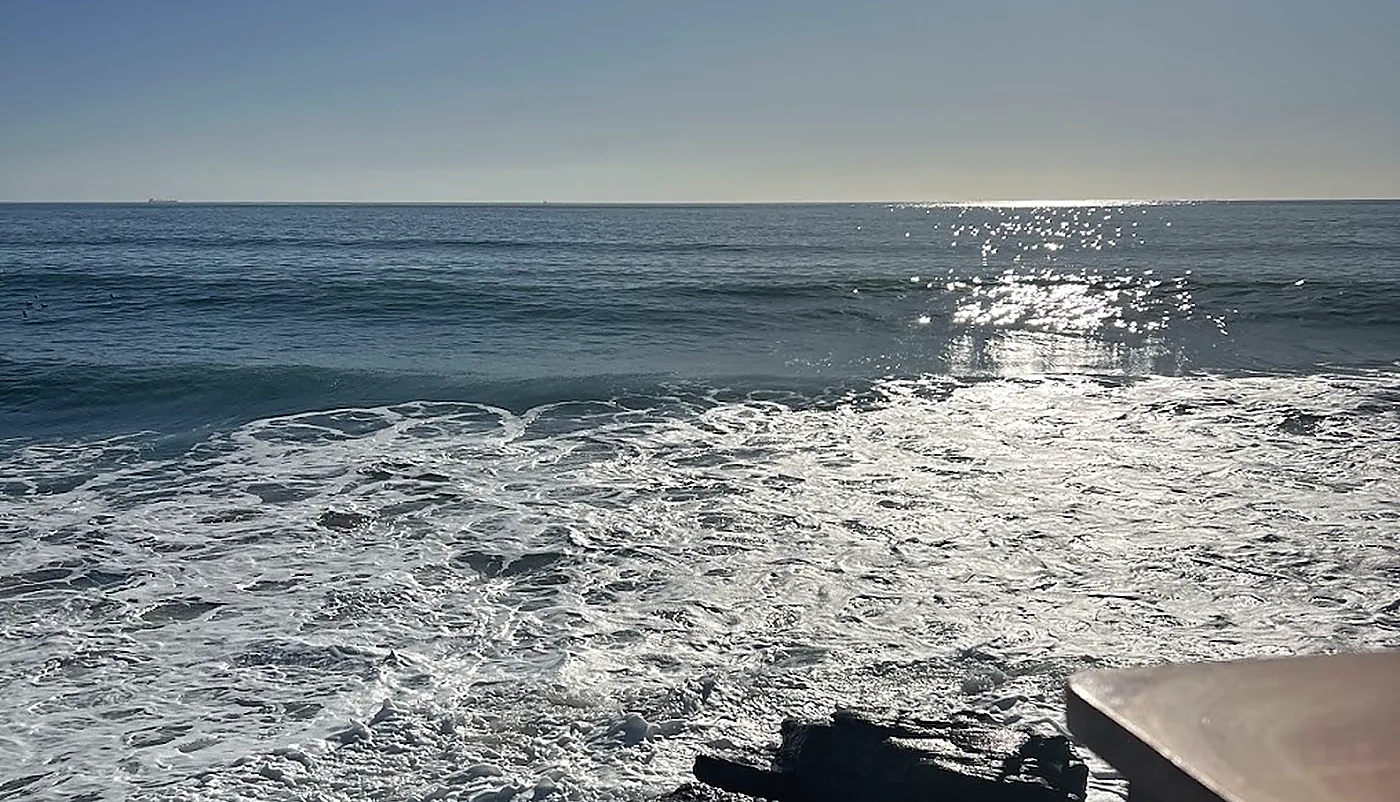
Morocco sits at roughly the same latitude as southern Florida, and the sea is nothing like Florida. This catches out almost every first-time visitor.
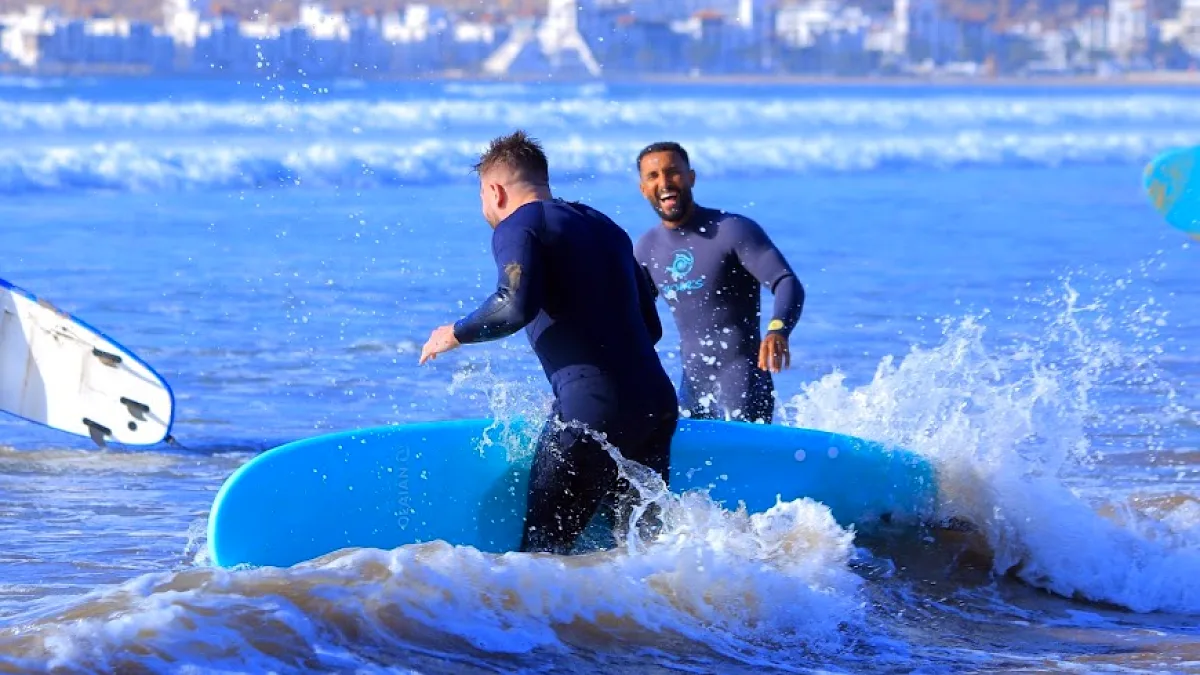
Why the water is cold
A cold current runs south along this coast, and seasonal winds push warm surface water offshore, drawing colder water up from below to replace it. The result is an Atlantic several degrees cooler than the latitude would suggest.
It also explains the strange sensation of a 28 °C afternoon and a sea that makes you gasp on entry.
What to wear, by season
December to March, the water sits around 17–18 °C and you want a 3/2 mm full suit. April to June, much the same at 17–19 °C, still a 3/2. July to September is the warmest window at 20–22 °C, when a shorty is comfortable for most people. October and November start in a shorty and finish in a full suit.
If you feel the cold, ask for a 4/3 in the winter months. It is a legitimate request rather than fussiness, and any decent camp keeps a range of thicknesses.
How long you can comfortably stay in
In winter, about ninety minutes before your hands get clumsy and your pop-up starts to suffer. In late summer, two hours or more. This is worth knowing when you plan a double session day: the second session in January is shorter than you think.
Small things that make a large difference
A hooded changing robe is the best thing you can bring for winter. Wind on a wet wetsuit is what actually makes you cold, not the water. Neoprene booties are worth it if you are surfing rocky points regularly.
How to tell if a wetsuit fits
A wetsuit should feel slightly too tight on land. It works by trapping a thin layer of water against your skin, and a loose suit flushes constantly — cold water in, warm water out, all session.
Check three places. The neck should be snug without choking; a gap there is the main cause of flushing. The crotch should be pulled right up, because a low crotch restricts paddling more than any other fit problem. And the shoulders should allow a full rotation without the suit riding up your back.
If you can pinch more than a centimetre of loose neoprene at the lower back, size down. If you cannot lift your arms above your head comfortably, size up.
Getting into it without a fight
Roll the suit down to the ankles rather than pulling it on like trousers. Work each leg up in stages, using the flat of your hand rather than fingertips — fingernails put holes in neoprene faster than rocks do.
A plastic bag over your foot lets it slide through the ankle in one motion, which is the single best trick for a tight suit. Same with hands and wrists.
Getting out is easier if you rinse first. Salt makes neoprene grip skin, so ten seconds under the tap at the beach shower saves a two-minute struggle back at the house.
Looking after a suit that is not yours
Rinse it in fresh water after every session, hang it folded over the waist rather than on a hanger by the shoulders — hangers stretch and eventually tear the shoulder seams — and keep it out of direct sun, which degrades neoprene faster than anything else.
Never leave it screwed up wet in a bag overnight. It will smell within a day and it never fully recovers. Camps notice, and the guest after you notices more.
When you actually need booties, gloves or a hood
Booties are about rock, not cold, on this coast. If you are surfing the points regularly, they save your feet on the entry and exit; on the sandy bays you will not want them.
Gloves are rarely necessary here, even in January. Hands get clumsy after about ninety minutes in winter water, which is a signal to come in rather than a reason to buy gloves.
A hood is unnecessary. If you are cold enough to want one, the honest answer is a thicker suit and a shorter session.
What the numbers on a wetsuit mean
A 3/2 has 3 mm of neoprene on the torso and 2 mm on the arms and legs. Thicker on the core keeps you warm; thinner on the limbs keeps you mobile. A 4/3 is warmer and stiffer; a 2 mm shorty covers the torso and leaves the limbs bare.
Seam construction matters as much as thickness. Flatlock seams are stitched through and leak, which is fine in warm water. Glued and blind-stitched seams do not perforate the neoprene and are considerably warmer, and are what you want in January.
A back zip is easier to get into and lets more water in. A chest zip is a fight to enter and noticeably warmer. Camp suits are usually back zip for practical reasons.
Cold, and how it actually affects your session
Cold does not usually end a session by making you shiver. It ends it by making your hands clumsy, which makes your pop-up late, which makes you fall, which makes you colder.
The sequence is predictable: about ninety minutes in a 3/2 in January before fine motor control degrades. Recognising that as a cold signal rather than a failure of technique is useful, because the answer is to come in and go again tomorrow.
Wind is the real thief. Standing on the beach in a wet suit in an offshore breeze loses heat faster than sitting in the water. Get changed promptly, and bring a hooded changing robe in winter — it does more for your comfort than a thicker wetsuit.
Buying your own, if you decide to
For one trip a year to Morocco, use camp equipment. For two or more trips, or if you surf at home in similar temperatures, a 3/2 with glued and blind-stitched seams covers almost everything this coast throws at you.
Fit matters far more than brand. A €150 suit that fits is warmer than a €400 suit that does not.
If you buy locally, surf shops in Taghazout and Tamraght stock the major brands and prices are broadly comparable with Europe. What they do have is people who surf here every day and can tell you what actually works in January.
The short version
November to June, wear a 3/2 full suit. July to October, a shorty is comfortable for most people, with a 3/2 available if you feel the cold. Booties if you are surfing the rocky points regularly. Nothing else is necessary.
The water sits several degrees cooler than the latitude suggests because of a cold current and seasonal upwelling, which is the single fact that catches out first-time visitors. Expect 17 to 19 °C for most of the year and 21 to 22 °C at the end of summer.
Wetsuits are included at every reputable camp and a range of thicknesses is normal. Ask for a thicker suit if you are cold rather than enduring it — a cold surfer is a tired surfer, and a tired surfer catches fewer waves.
The best money you can spend on winter comfort here is not a thicker wetsuit. It is a hooded changing robe, because the wind on a wet suit between the water and the van is what actually makes people cold.
Rash vests, boardshorts and the summer question
In July, August and September a good number of surfers here wear boardshorts and a rash vest rather than neoprene, and for a short session in warm late-summer water that is entirely reasonable.
The catch is duration. Water at 21 °C feels warm for forty minutes and cold after ninety, and beginners spend far longer in the water than they plan to because paddling back out takes time. A shorty costs you nothing in mobility and buys an extra hour.
A rash vest is worth wearing regardless of temperature. It prevents board rash on your chest and ribs, which is the complaint most beginners have on day two, and it removes the need to reapply sun cream to your back mid-session.
Long-sleeve rash vests with UPF protection are the single most useful non-neoprene item for a Moroccan summer trip. The Atlantic wind hides the sun completely and shoulders burn before anybody notices.