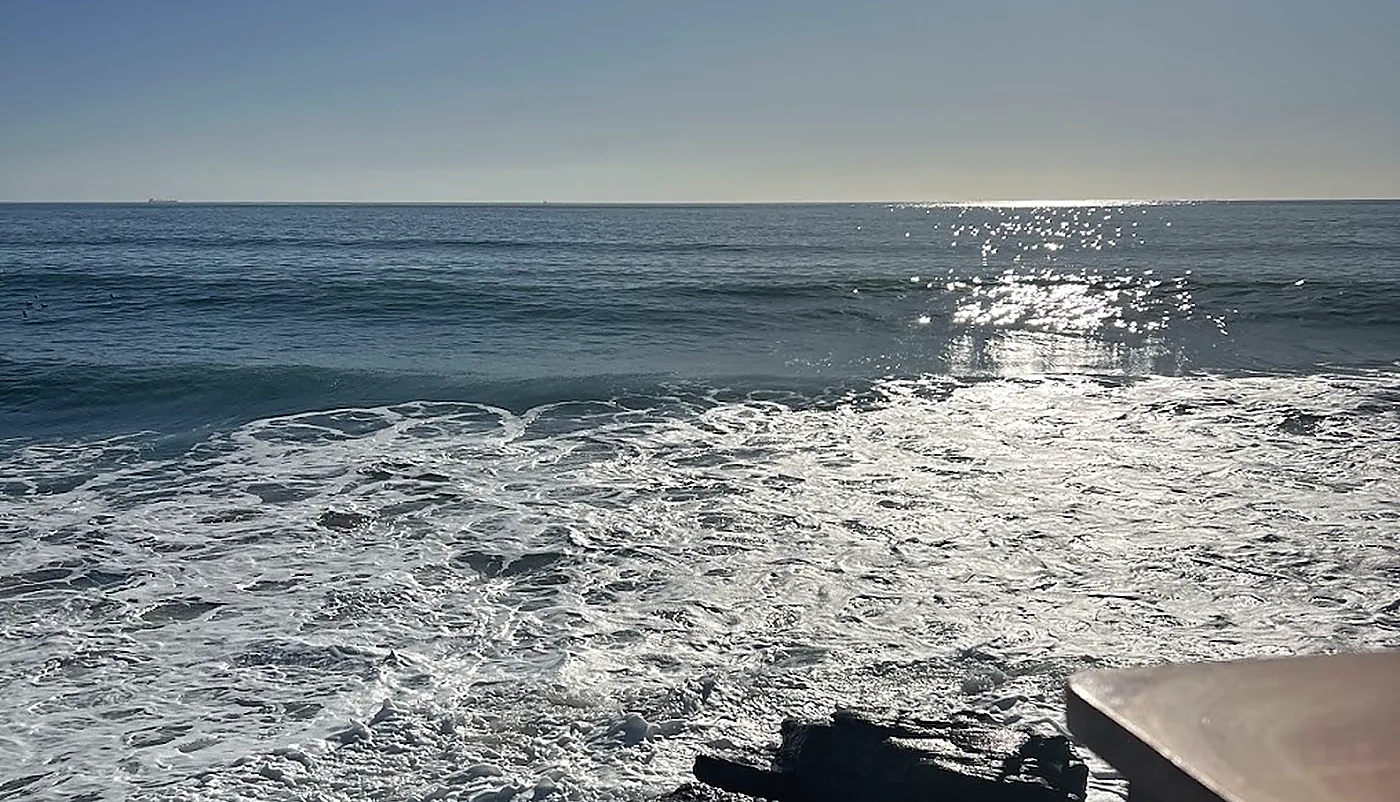
The road north from Taghazout to Essaouira is two and a half hours if you drive it and two days if you do it properly. It is the best coastal drive in Morocco and almost nobody takes their time over it.
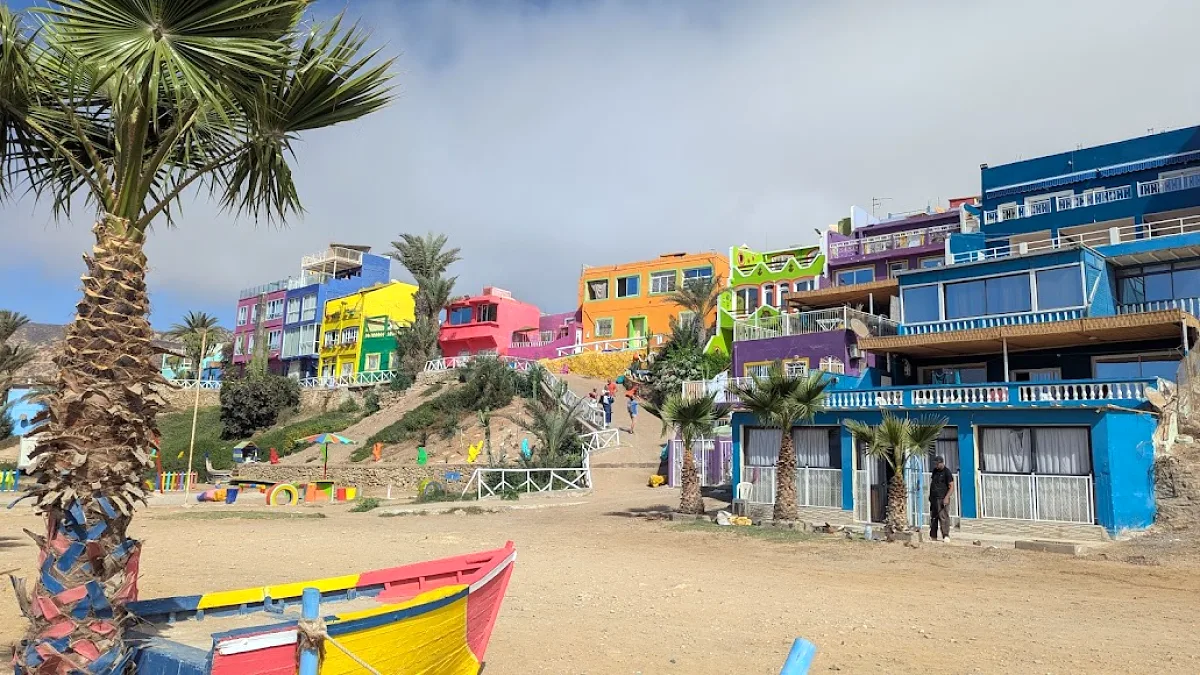
The route in outline
Taghazout to Tamri is about 30 km on the coast road, climbing away from the bay past the northern points. Tamri to the Timlalin dunes is another 20 km or so. Timlalin to Imsouane is roughly 25 km. Imsouane to Essaouira is about 100 km inland and back to the coast.
Total, around 175 km and two and a half hours of actual driving. Done as a single push it is a pleasant morning. Done as a two-day trip with surf stops, it is one of the better small journeys available in this country.
The road is sealed throughout, well surfaced and lightly trafficked once you are past Tamri. It winds, so it takes longer than the distance suggests.
Stop one: Tamri
Thirty minutes north, a working village with a river mouth and one of the most exposed beach breaks on this coast. Tamri picks up more swell than anywhere nearby, which makes it the answer on small days and a heavy, closing-out mess on big ones.
It is also one of the few local spots offering consistent lefts, which is a relief after a week of right-hand points.
Bananas grow in the valley behind and the roadside stalls here are the best on the coast. Stop, buy a kilo, eat them on the beach.
Wind arrives early and hard, so a Tamri session means being there shortly after breakfast rather than deciding at eleven.
Stop two: the Timlalin dunes
Twenty kilometres further, a genuine dune field that runs to a cliff above the Atlantic. It is the only place on this coast where the sand simply stops at a drop into the ocean, and it is startling the first time you see it.
Quad biking, sandboarding and camel rides all operate here, and a sunset session on the dunes is a legitimate reason to break the drive. It is not the Sahara, and honest operators say so — it is a coastal dune system, which is its own rare thing.
The cliffs here are also one of the last strongholds of the northern bald ibis, one of the rarest birds in the world. If you see them, keep your distance and consider yourself lucky.
Stop three: Imsouane
The obvious overnight. A working fishing harbour with one of the longest, slowest right-hand waves in Morocco peeling across the bay below the village.
Surf the Bay in the morning on a low, rising tide — it is a longboarder's wave and a beginner's dream, and rides are long enough that you have time to think. Around the headland, Cathedral Point is punchier and suits stronger surfers.
Eat at the port, where the fish comes off the boats at midday and is grilled in front of you for very little money. Cafés above the bay look straight down the wave, which makes waiting for the tide considerably more pleasant.
If you are doing the drive over two days, this is where you stop.
The inland stretch
North of Imsouane the road turns inland and climbs through argan forest before rejoining the coast. This is the least dramatic section and the most interesting botanically — argan trees grow nowhere else on earth in any quantity, and the goats really do climb them.
Women's cooperatives along this road press argan oil by hand. They are worth a stop for the process rather than only the product, and buying here rather than at an airport puts money into the right hands at a third of the price.
There is little in the way of fuel or food on this stretch, so fill up in Tamri or Imsouane.
Arriving in Essaouira
The approach is flat and windy and then quite suddenly you are at a walled eighteenth-century port with ramparts, a fishing harbour and a UNESCO-listed medina.
It is a completely different Morocco from the one you left that morning: a city with history, an art scene, a music festival and food that reflects a trading port rather than a village.
Park outside the medina — cars cannot enter — and walk in. Two nights is the minimum that does it justice; three is better.
Doing it in reverse, and doing it as a loop
Everything works equally well southbound, and if you are flying into Essaouira Mogador that is the sensible direction.
As a loop from Taghazout, allow three days: north along the coast with a night in Imsouane, two nights in Essaouira, then return either the same way or inland via Marrakech if you want a completely different second half.
The inland return adds three hours and a mountain crossing, and it turns a coastal drive into a proper circuit.
Practicalities
A hire car is the natural way to do this. Roads are good, signage is adequate, and having your own vehicle means stopping wherever the surf looks interesting, which is the entire point.
Buses run Agadir to Essaouira and will drop you at Tamri and Imsouane, but they do not stop at dunes or empty beaches.
Fuel is cheap by European standards. Police checkpoints are routine — slow down, be polite, have documents ready.
Do not drive this road after dark. It winds, it is unlit, and there are animals and pedestrians on it.
Board racks are worth arranging with the rental company in advance rather than discovering the problem at the desk.
What makes this drive worth taking slowly
You pass through four distinct landscapes in under two hours: surf village, exposed river-mouth coast, coastal desert, and argan forest, before arriving at a walled port city.
Almost nobody stops. Most people who make this journey do it as a transfer between two bookings and see it through a window.
Two days and a hire car turns it into one of the better parts of a Morocco trip, and it costs about the price of one night's accommodation.
Two itineraries: one day and two days
One day, if that is all you have. Leave Taghazout at seven. Surf Tamri at eight while the wind is still down. Coffee and bananas at the roadside by ten. Timlalin dunes by eleven for an hour on the sand. Imsouane for lunch at the harbour around one. Back on the road by three, Essaouira by half past four, medina by five with enough light to find your riad.
That is a full day and it works, provided you accept that you are seeing rather than lingering.
Two days, which is the version worth taking. Day one: leave late morning, surf Tamri or drive straight to the Timlalin dunes for a sunset session on the sand with quads or a camel ride. Sleep in Imsouane.
Day two: dawn surf in the bay on a low, rising tide — the best hour of the whole trip. Breakfast above the wave. Fish at the port for lunch. Argan cooperative on the inland stretch in the afternoon. Essaouira for dinner.
The difference between the two versions is one night in a fishing village and one dawn session on a very long wave. It costs almost nothing and it is what people remember.
What it costs and what to book ahead
Car hire from Agadir runs roughly €25 to €40 a day for a small car, plus fuel, which is cheap by European standards. For two people that makes the drive comparable to two bus tickets once you factor in the freedom to stop.
A night in Imsouane costs very little — guesthouses and small camps rather than hotels. Book ahead in winter, when the bay is busy with surfers, and turn up in summer when it is not.
Essaouira accommodation spans everything from cheap hostels to expensive riads. Book the first night at least; arriving in a walled medina at dusk without a reservation is a specific kind of stress.
Timlalin activities run €15 to €40 depending on what you do, and you can book on arrival or in advance.
Total for two people doing the two-day version: roughly €150 to €250 including car, fuel, one night in Imsouane, food and one dune activity. It is one of the better-value pieces of travel in this part of Morocco.
The one thing worth booking well ahead is the car itself in peak weeks. Everything else can be arranged as you go, and arranging it as you go is half the pleasure of a road trip.