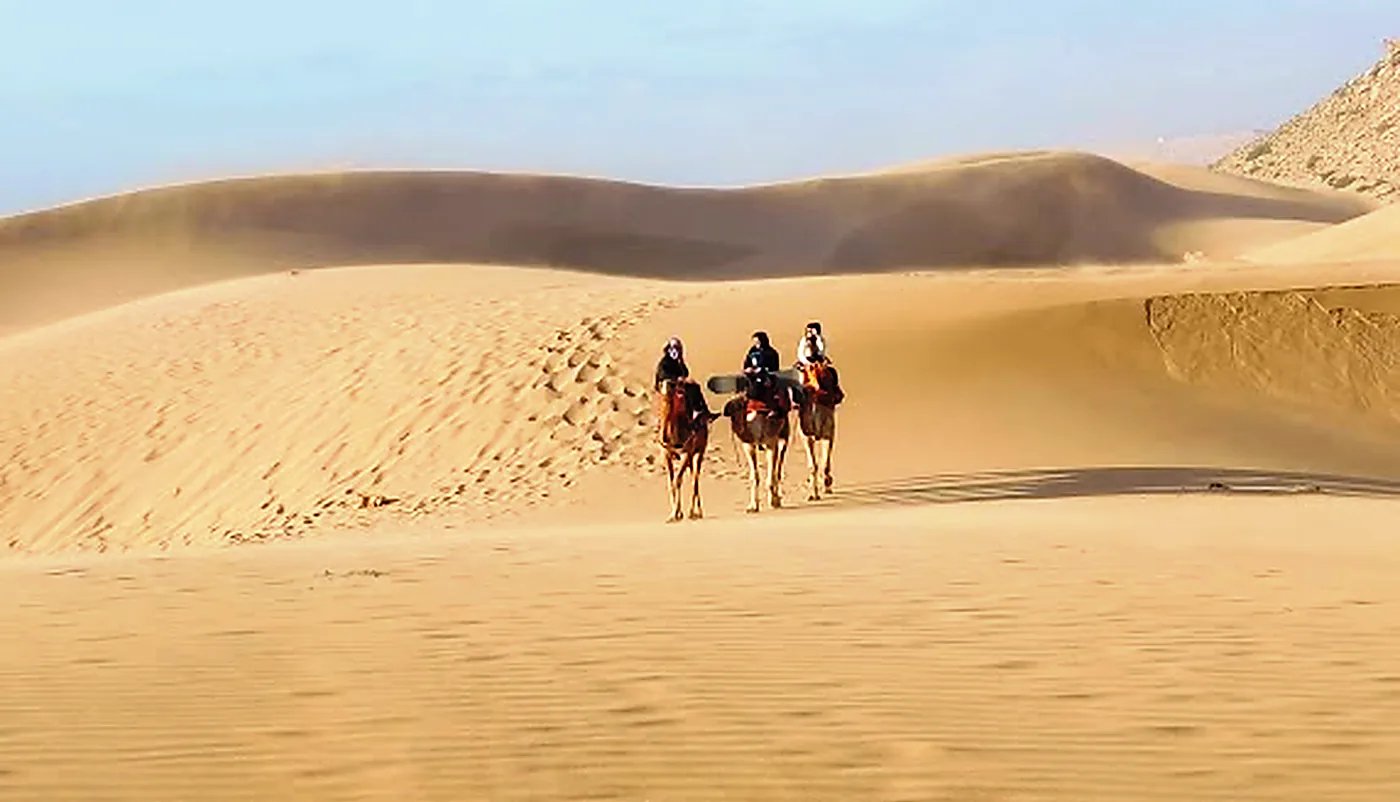
This coast photographs unusually well: right-hand points that let you shoot from land, mountains behind the water, and light that turns gold for the last hour of every day.
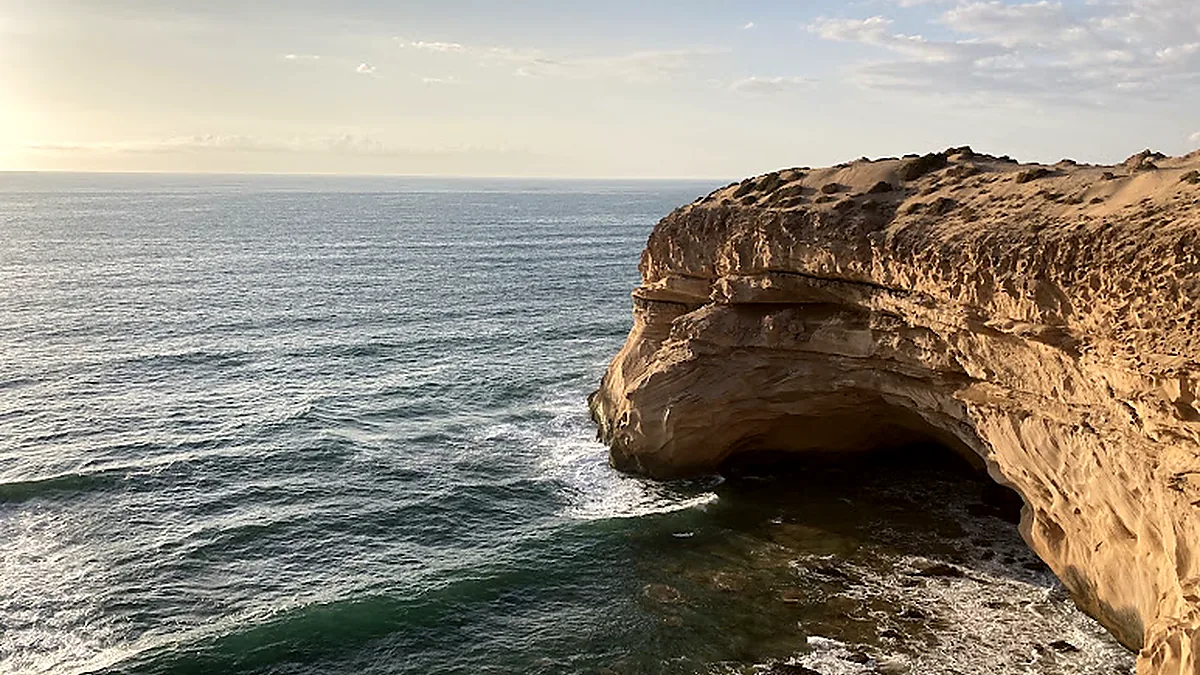
Why this coast is good for photography
The points are the reason. A right-hand point break peels along a headland, which means you can stand on that headland and shoot the whole ride from dry land. On a beach break you are either in the water or shooting from too far away.
The backdrop helps too — the Atlas foothills sit behind much of this coast, so wide shots have depth rather than a flat horizon.
And the light is reliable. Clear skies most of the year, offshore mornings that hold the wave face clean, and an evening golden hour that is genuinely golden because of dust in the air.
The best vantage points, spot by spot
Anchor Point: the walk along the headland gives you the entire wave from above, and on a big day this is one of the best free viewpoints in Moroccan surfing. Long lens needed.
Hash Point: shoot from a rooftop café in the village. You are close, you are comfortable, and you have a coffee.
Panoramas: the roadside above the break looks straight down on the peak. The clue is in the name.
Banana Point: the headland gives you the length of the right-hander with the beach and river mouth behind.
Imsouane: cafés above the bay look directly down the wave, and the length of the ride means you can follow a single surfer for a long sequence.
Timlalin: for landscape rather than surf — dunes running to a cliff above the ocean, best in the last hour of light.
Camera settings that work
Shutter speed is the priority. 1/1000 or faster freezes spray; below 1/500 you get motion blur on the lip. If in doubt, go faster and raise ISO.
Aperture around f/5.6 to f/8 gives enough depth of field to keep a moving surfer sharp when your focus is imperfect, which it will be.
Continuous autofocus with tracking, and burst mode. Surfing happens in about two seconds and the good frame is rarely the one you would have chosen.
Spot or centre-weighted metering, because the water is bright and matrix metering will underexpose the surfer.
Shoot slightly under rather than over. Blown highlights on white water cannot be recovered; shadows can.
Lenses, honestly
From land you want length. 200 mm is a minimum for anything meaningful, 300 to 400 mm is where surf photography actually lives, and even then you will wish you had more.
A 70–200 is the practical compromise for a traveller: usable, not enormous, and fine at the closer spots like Hash Point and Panoramas.
Wide lenses are for water work and for landscape. From the beach they produce photographs where the surfer is a speck.
If you are bringing one lens and want surf shots, bring the longest one you own.
Shooting on a phone
Modern phones do better than people expect, with two caveats. Digital zoom destroys quality, so shoot at native focal length and crop later rather than zooming in. And use burst mode, which most phones hide behind holding the shutter.
The best phone surf photographs are not of surfing. They are of the walk down to the beach, boards against a wall, the changing area, the light on the water at seven in the morning. Shoot the trip rather than the wave and your phone will do a far better job.
A cheap clip-on telephoto is not worth it. A cheap tripod for the desert night sky absolutely is.
Water housings and going in
Shooting from the water is where surf photography becomes interesting and where equipment becomes expensive. A proper housing costs more than many cameras.
An action camera in a simple housing is the accessible entry point and produces genuinely good results in the impact zone, which is exactly where a big camera cannot go.
If you do go in: swim fins, a leash for the housing, and a serious understanding of the break. Being in the water with a camera and no board in a lineup you do not know is how people get hurt and how surfers get annoyed.
Ask permission before shooting people close-up in the water. It is their session, not your shoot.
Light through the day
Early morning: cleanest conditions, offshore wind holding the wave face, and low side light. Best all-round window, and it coincides with when everyone is actually surfing.
Midday: harsh, flat and unflattering. Use it for detail shots, the village, textures.
Late afternoon: the golden hour here is genuinely long and genuinely gold. Shoot into the light for silhouettes of surfers walking out, or with it for warm colour on the wave face.
After sunset: fifteen minutes of blue light that most people miss because they have packed up. The best photographs of the day are often taken then.
Etiquette and the rules that matter
Ask before photographing people, in the water and out of it, and accept a no.
Do not photograph children without a parent present and agreeing.
In the souk and around fishing harbours you are photographing somebody's workplace. Buy something, or ask, or both.
Drones are heavily restricted in Morocco and are frequently confiscated at the border. Do not plan a trip around aerial footage.
And if you shoot somebody surfing, offer to send them the photograph. It costs you nothing, it is the single fastest way to be welcome in a lineup, and it is how most surf photographers end up with friends on every coast they visit.
Editing, sharing and the shots worth keeping
Shoot in RAW if your camera allows it. Surf photography is high-contrast — bright white water against a dark wave face — and RAW gives you the latitude to recover both.
In editing, the two adjustments that matter most are pulling highlights down and adding contrast to the wave face. Resist the urge to over-saturate the water; Moroccan Atlantic is a green-blue rather than a tropical turquoise and making it turquoise looks fake.
Straighten the horizon. Nothing marks an amateur surf photograph faster than a tilted sea.
Crop hard. A surfer occupying five percent of the frame is a landscape with a speck in it; crop until the surfer reads and the wave still has shape.
On what to keep: the technically perfect shot of somebody you do not know is worth less than the slightly soft shot of your friend standing up for the first time. Six days of a surf trip produce maybe four photographs anyone will look at again, and they are usually not the ones of waves.
Shoot the whole trip — the boards in the van, the tea, the walk down, the wetsuits on the line, the faces at dinner. That is the story. The wave shots are the punctuation.
Protecting your gear on this coast
Sand and salt are the two things that end cameras here, and they arrive together on the wind.
Change lenses as little as possible, and never on a beach in wind. If you must, turn your back to the wind, point the camera body downwards and be quick.
A cheap rain cover doubles as a sand cover and weighs nothing. A UV filter on the front element is a €20 sacrifice instead of a €600 one.
Salt spray settles on everything within fifty metres of breaking surf even when you cannot feel it. Wipe the body and lens down with a slightly damp cloth at the end of each day, then dry it.
Keep silica gel packets in your bag; the humidity swing between a cold morning and a hot afternoon causes condensation inside lenses.
For the desert, seal everything in zip-lock bags in your luggage. Fine Saharan sand gets into zips, buttons and lens mounts and does not come out.
And back up daily. A phone, a laptop or a portable drive — anything. Cameras get dropped, cards fail, and bags get left in vans. A week of photographs is worth ten minutes a night.