Morocco works well for families, and it works badly if you plan it like a couple's trip with children attached. The differences are worth knowing before you book.
What age can start surfing?
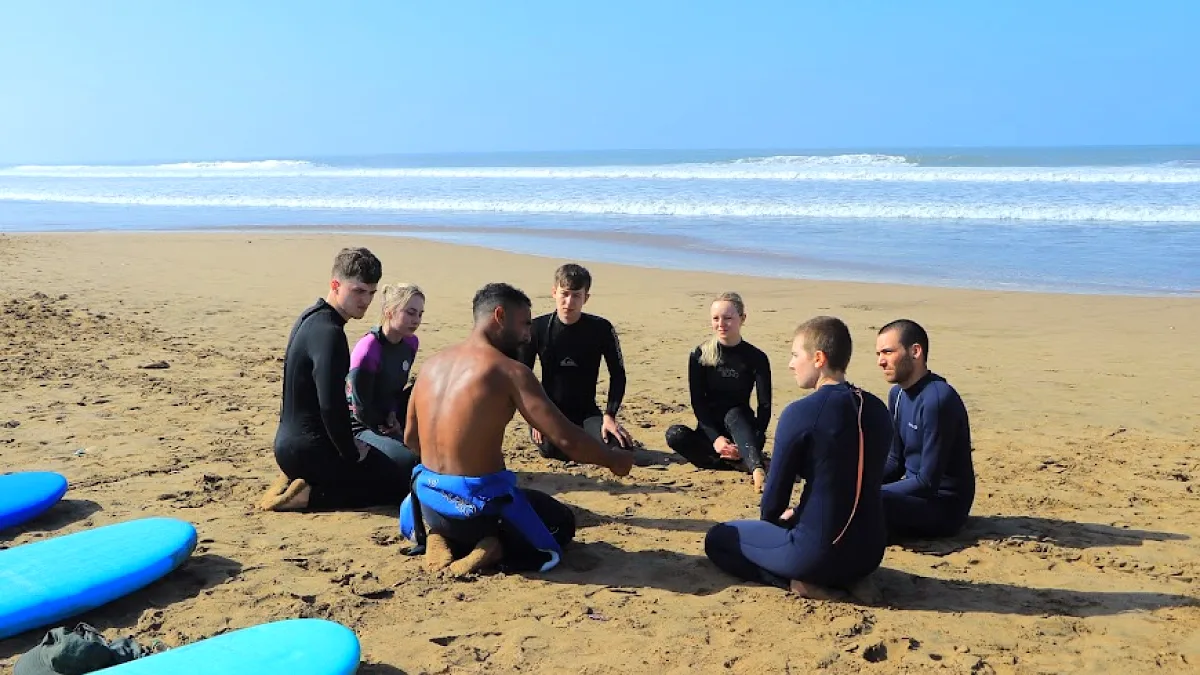
Around six or seven for a proper lesson, provided the child is confident in water out of their depth. Younger than that, whitewater play with a parent is more realistic and more fun than instruction.
From eight to twelve is the sweet spot. Children in this range learn frighteningly fast — low centre of gravity, no fear, no ingrained bad habits — and routinely outpace their parents within three days.
Teenagers do well and often want to progress faster than a family group allows, which is worth planning for by booking them into a separate group.
The real requirement is not age but water confidence. A child who panics when a wave breaks over their head will not enjoy a lesson regardless of how well they swim in a pool.
Which beaches suit families
Sandy bays only, at least at first. Banana Point's beach section and Crocs are the obvious choices — sand bottom, mellow waves, room to spread out, and no rock to worry about.
Avoid anything described as a point or a reef until children are surfing genuinely competently. The rocky spots on this coast are unforgiving of the falls beginners take.
Tide matters more with children. A shore dump at low tide that an adult shrugs off will frighten a child, and a good instructor will move the lesson rather than push through it.
Imsouane deserves special mention: the long, slow wave is exceptionally good for children because it gives them time on their feet rather than three seconds and a wipeout.
Accommodation and room configurations
Ask specifically about family rooms rather than assuming. Surf camps are built around shared rooms priced per bed, which does not suit a family of four, and the options vary enormously between properties.
Private bathrooms matter considerably more with children than without. If a camp has shared facilities on each floor, ask what the arrangement actually is before booking.
Consider whether a communal dinner every night suits your family. Some children love it; others need to eat at six and go to bed, which a camp serving dinner at half past seven does not accommodate easily. Ask about earlier meals — most camps will arrange it if asked in advance.
A guesthouse or apartment with lessons booked separately is often the better structure for families with younger children, precisely because it gives you control over meals and bedtimes.
The desert question
The full Sahara trip involves two days of six-to-eight-hour drives. That is difficult for adults and genuinely hard on children under about ten.
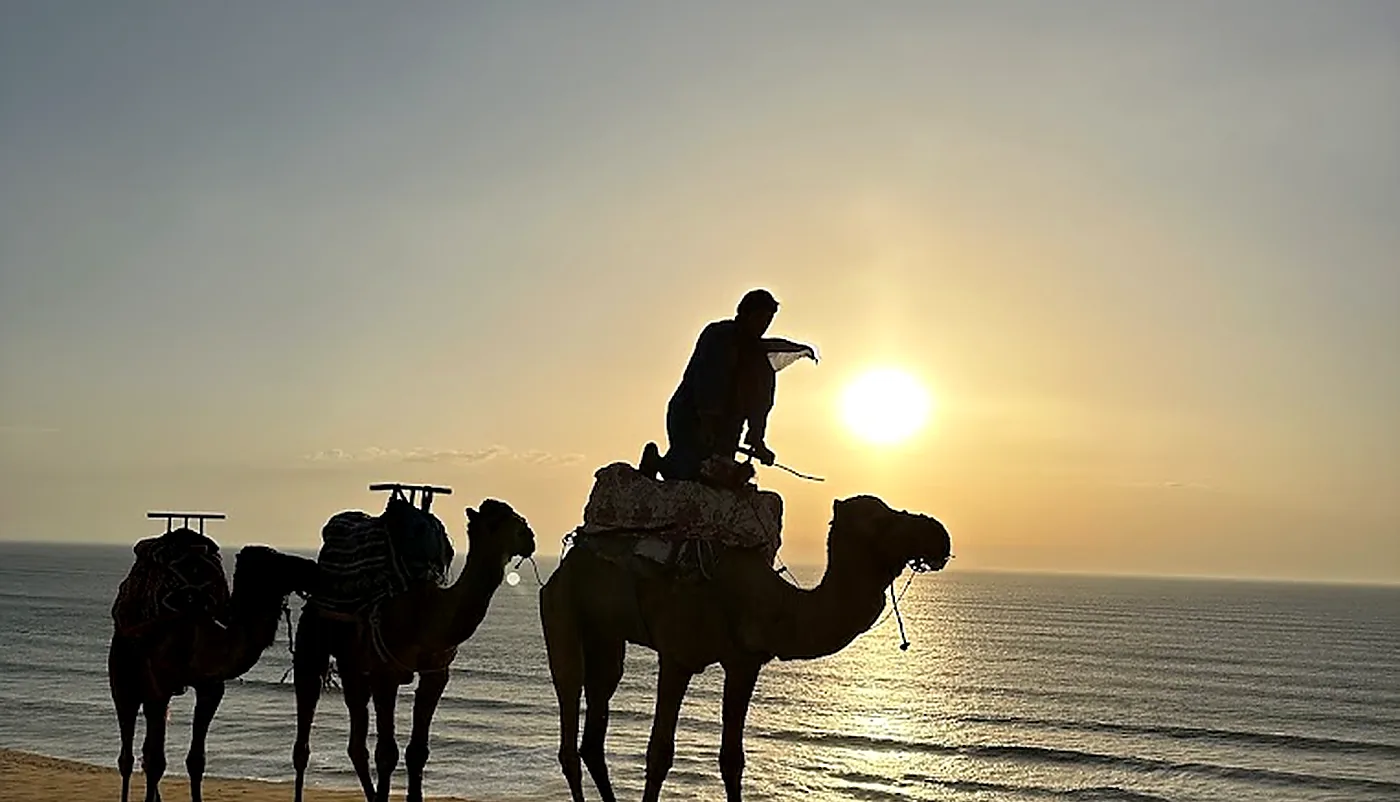
The alternatives are good. The Timlalin dunes north of Agadir give you sandboarding, camels and a real dune landscape as a half-day trip. The Agafay desert near Marrakech gives you a desert night with forty minutes of driving instead of two days.
If you do take children to Erg Chebbi, build in more stops than an adult itinerary would, bring entertainment for the vehicle, ask about family tents, and request earlier dinner at the camp.
The dunes themselves are a hit with every age. It is the getting there that needs planning.
A realistic family day
Breakfast together, unhurried. One surf session in the morning while the water is cleanest and everybody is fresh — with children, one good session beats two mediocre ones by a wide margin.
Lunch, then something low-energy in the afternoon: the beach, the pool if there is one, a walk to the shops, or a nap for the adults while the teenagers skate.
Optional second session late afternoon for whoever wants it. Dinner early. Everybody asleep by nine, including the parents.
The mistake is scheduling a family week like an adult week. Two sessions a day for six days will break a family by Wednesday.
What to pack that you would not otherwise
Children's wetsuits are usually available but the size range is narrower than for adults — confirm before you travel, and consider bringing your own if your child is small or unusually tall.
Rash vests with long sleeves and UPF protection, because children burn faster and reapplying sun cream mid-session is not happening.
A beach shelter or large towel for shade. The beaches here have very little natural shade.
Ear plugs for swimming if your child is prone to ear infections, and a supply of any medication you rely on, since brand names differ locally.
Snacks. Children get hungry at times that do not align with Moroccan meal schedules.
Safety, specifically for families
Rip currents are the genuine hazard and children should never be in the water without an adult or instructor watching, even in shallow water. Learn what a rip looks like — a darker channel with less foam — on the first day.
Sun is the second. Morocco's Atlantic wind hides the heat completely and children burn before anybody notices.
Stomach upsets are common in the first days. Bottled water, rehydration sachets and patience.
Traffic in villages is light but drivers do not expect children to run into the road. Hold hands on the coast road.
Is Morocco a good family destination?
Yes, and for a reason that is easy to miss: Moroccan culture is genuinely, unusually welcoming of children. Restaurant staff will talk to your kids, shopkeepers will give them things, and nobody will look sideways at a child being loud in a café.
For families used to a certain European frostiness towards children in public, this is a noticeable and pleasant difference.
The practical requirements are modest — sun protection, water confidence, a realistic schedule and the right beach. Get those four right and it is one of the easier long-haul-adjacent family trips available.
Costs and booking for a family
Family pricing works differently from solo or couple pricing, and the differences are worth understanding before you compare quotes.
Camps price per bed, so a family of four in a four-bed room often pays close to what four unrelated travellers would. That is good value, and it means a private family room usually carries a supplement.
Children's lesson rates are frequently lower, and some camps offer a discount for under-twelves on the package as a whole. Ask; it is rarely advertised.
Where families spend more is on room configuration and on flexibility. A private bathroom, an earlier dinner and a spare afternoon all cost something, in money or in options.
Budget roughly the same per person as an adult trip and add 10 to 15 percent for the room upgrade you will probably want.
Book earlier than you would otherwise. Family rooms are the scarcest room type at every camp on this coast, and school holiday weeks — which is when families travel — are also the busiest weeks of the year.
And be specific in your first message: ages of the children, swimming ability, whether they have surfed, and whether you want them in a group with other children or with you. A camp that answers all four properly is the one to book.
Keeping non-surfing days good
The days that make or break a family trip are the ones nobody is in the water. Have three or four in reserve.
Paradise Valley works well from around age eight — the walk in is a scramble that children usually enjoy more than adults, and the pools are the reward. Go in spring when water levels are high.
The Timlalin dunes are the reliable winner. Sandboarding requires no skill, camels are a novelty at any age, and the drive is an hour rather than a day.
Souk El Had in Agadir is an hour of sensory overload that most children love, provided you set expectations about buying things beforehand.
A hammam is worth doing with older children and best avoided with younger ones.
And do not underestimate a pool and a quiet afternoon. Families who schedule every day end up exhausted; families who leave two afternoons genuinely empty end up relaxed. The village, the beach and a book is a legitimate plan.