Three meals a day is standard at most camps, and the food turns out to be a much larger part of the trip than the brochures suggest.
Breakfast
Flatbread and msemen — a folded, layered pancake best eaten hot — with olives, eggs, jam, amlou made from almonds and argan oil, fruit, and mint tea poured from an unnecessary height. Eaten on a terrace while somebody argues about the forecast.
Tagine, properly understood
The word describes both the cone-shaped clay pot and the dish cooked in it. The shape traps steam and returns it to the food, which is how meat and vegetables come out of it so soft after hours over a low flame.
Chicken with preserved lemon and olives, lamb with prunes, and vegetable versions all appear regularly. It arrives at the table still bubbling and you eat it with bread rather than cutlery.
Couscous on Friday
Traditionally the Friday meal after prayers, and still the big communal dish of the week in most households and many camps. Steamed properly, it is nothing like the instant version sold abroad.
From the Atlantic
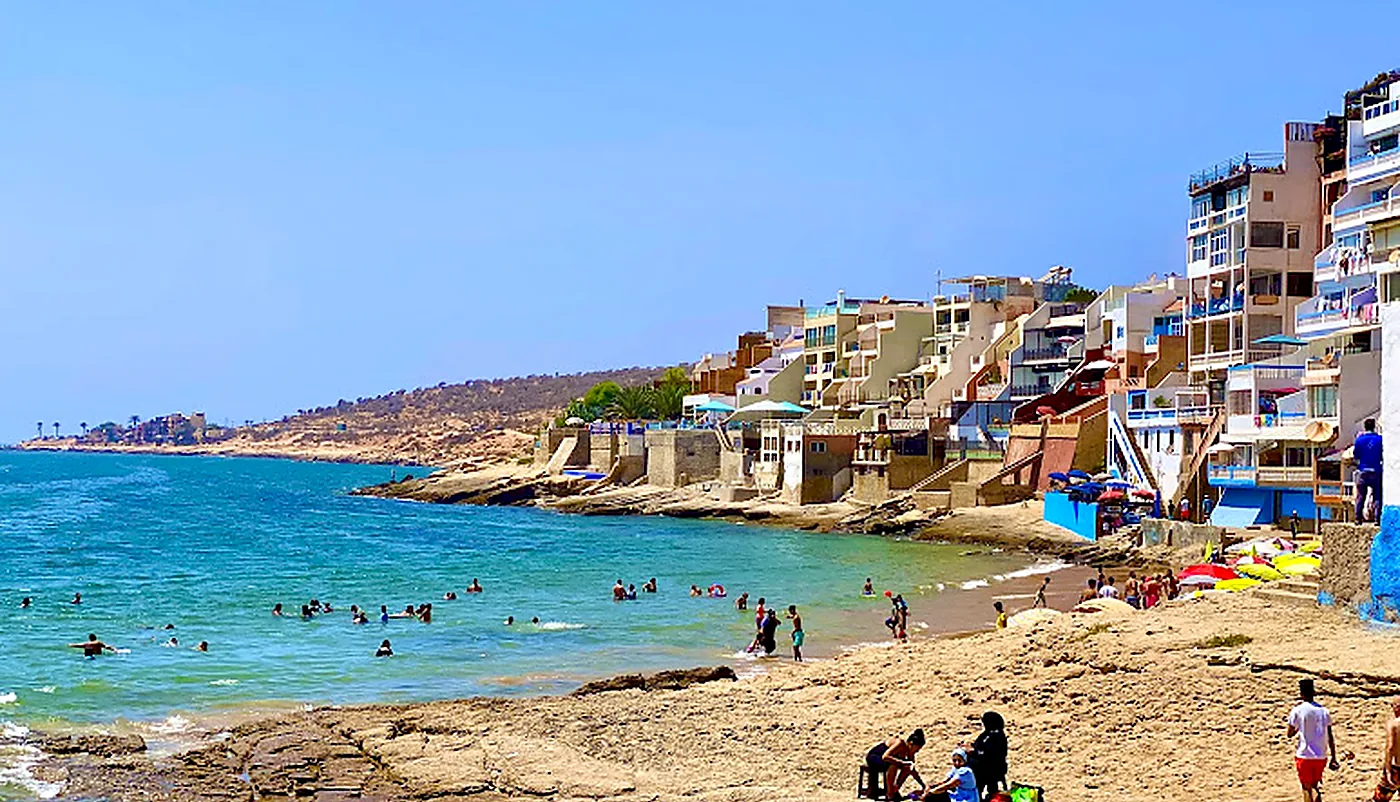
Sardines grilled on the harbour, whole fish with chermoula, and calamari. Agadir is one of the largest fishing ports in the country, so what reaches the table on this coast was very recently in the water.
Mint tea
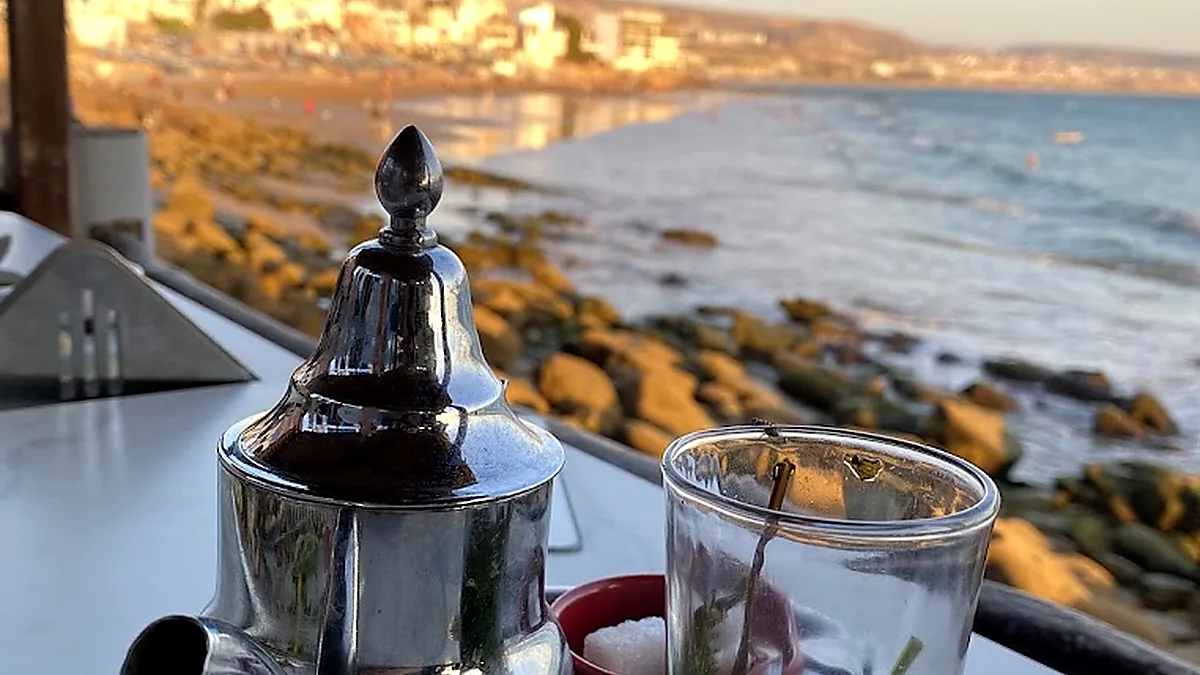
Green tea, fresh mint and a quantity of sugar that startles most visitors. It is poured from height to aerate it and build foam. Refusing a glass is possible but declining the gesture behind it is a shame.
Dietary needs
Vegetarians are easy to accommodate and eat well. Vegans, coeliacs and anyone with allergies should tell the camp in advance rather than on arrival — village shopping happens the day before, not on demand.
What Amazigh cooking on this coast actually is
The food in the Souss region is not the same as Fes or Marrakech cooking. It is Amazigh, it leans on argan oil and almonds, and it is simpler and less sweet than the imperial-city dishes that dominate Moroccan restaurant menus abroad.
Amlou is the signature: almonds, argan oil and honey ground into a thick spread that sits somewhere between nut butter and dessert, eaten at breakfast on bread. It is regional to exactly this stretch of country and it is the thing most guests try to take home.
Tagines here use more fish and fewer dried fruits than northern versions, reflecting a coastline rather than a caravan route.
The dishes worth seeking out
Harira, the tomato and lentil soup eaten to break the fast in Ramadan and served year-round. Bissara, a thick fava bean soup eaten at breakfast with olive oil and cumin, cheap and enormously good on a cold morning.
Rfissa, shredded msemen with chicken, lentils and fenugreek, a dish traditionally cooked for a new mother and rarely on tourist menus. Tanjia, a Marrakchi speciality slow-cooked in a clay urn in the embers of a hammam furnace.
Medfouna, the stuffed bread baked in sand you will meet in the desert, and which gets called Berber pizza on menus written for visitors.
And sardines. Agadir is one of the largest sardine ports in the world and a plate of them grilled at the harbour costs almost nothing.
Eating well on a surf schedule
Surfing burns more than people expect and the classic mistake is under-eating at breakfast because you are nervous, then hitting a wall halfway through the second session.
Eat properly and early. Bread, eggs, amlou and fruit is close to an ideal pre-session breakfast: slow carbohydrate, fat and enough protein.
Take something to the beach. Dates and almonds are sold everywhere, weigh nothing and are exactly what you want between sessions.
Hydrate with more than water. Sweating in a wetsuit loses salt, and plain water alone leaves you flat by mid-afternoon. Rehydration sachets or a salty snack fix it.
Practical notes on dietary needs and safety
Vegetarian is easy and eats extremely well here — vegetable tagine, bissara, zaalouk, salads, lentils. Vegan requires more notice, mainly because butter and eggs appear where you would not expect them. Coeliac is the hardest, because bread is central to every meal and the concept is not widely understood; give the camp written notice at booking.
Street food is generally safe if it is busy and cooked in front of you. Avoid pre-cut fruit and salads washed in tap water when you first arrive and give your stomach a few days to adjust.
Tap water is chlorinated and locals drink it; visitors generally do better on bottled or filtered for a short trip.
Mint tea, and the ritual around it
Green gunpowder tea, a large bundle of fresh spearmint and a quantity of sugar that startles most visitors. It is poured from height to aerate it and build a head of foam, which is considered the mark of a well-poured glass.
Refusing is possible but the offer is hospitality rather than commerce, and accepting costs you ten minutes and gains you a conversation. In a shop it does not commit you to buying anything, whatever you may have read.
Three glasses are traditionally poured from the same pot, each stronger than the last. There is a well-known saying comparing them to life, love and death; you will hear it, and it is worth hearing.
If you want less sugar, ask before it is made. It goes into the pot, not the glass.
Ramadan, and eating during it
During Ramadan most Moroccans fast from dawn to sunset. Cafés in villages may close during the day and open spectacularly at sunset for iftar, the breaking of the fast, which is one of the best times of year to eat in Morocco.
Surf camps continue serving guests normally. Restaurants in tourist areas mostly stay open. Eating, drinking and smoking in the street during daylight is legal for visitors and is best avoided as a courtesy.
Iftar begins with dates and milk, then harira, then everything else. If you are invited to one, go. It is the single most generous meal in Moroccan culture and being a stranger is not an obstacle.
Cooking classes and taking it home
Most camps and many riads run tagine cooking sessions, and they are more useful than they sound — the technique is genuinely simple and the results at home are genuinely good, provided you buy a real tagine pot rather than a decorative one.
What to bring home: ras el hanout from a spice merchant rather than a supermarket, saffron from Taliouine if you pass through, argan oil and amlou from a cooperative, and preserved lemons if your luggage allows.
What not to bring home: a decorative tagine you will never cook in, and spices from an airport shop at four times the price.
Eating well, simply
Eat what the camp cooks. It is regional, it is fresh, and it is generally better than what you would find yourself in the villages.
Eat sardines at least once, grilled at a harbour, costing almost nothing.
Accept the tea. Every glass is an invitation to sit down for ten minutes, and ten minutes sitting down with somebody is how travel stops being sightseeing.
Tell the camp about dietary needs at booking rather than on arrival, because shopping happens in advance and a village does not have a wholefoods aisle.
And bring home the ingredients rather than the souvenirs. Ras el hanout from a spice merchant, amlou from a cooperative and a bag of the right dates will reproduce the trip in your kitchen for months. A decorative tagine pot will sit on a shelf.