Most one-week Morocco itineraries fail the same way: they list too many places and quietly bury fifteen hours of driving.
Option one: coast only
Seven nights based on the Atlantic coast, surfing twice a day, with afternoon trips to Paradise Valley, the Agadir souk and Taghazout. Around two hours of driving all week.
This is the version that makes you a surfer. Five unbroken days in the water is where beginners stop fighting the board and start using it. Choose this if learning is the priority.
Option two: surf and Sahara
Four days on the coast, then inland over the High Atlas to Aït Ben Haddou, the Todra gorges and a night at Erg Chebbi, finishing in Marrakech. About seventeen hours of driving across three days.
You get three completely different Moroccos in a week. Choose this if you want the country as well as the waves, and accept that two of your days are largely spent moving.
Option three: culture and coast
Two nights in Marrakech with a guide, a night in the rocky Agafay desert, then four nights on the coast surfing. Around eight hours of driving.
The best first-trip structure for people who are not primarily coming to surf. You see a great city properly rather than passing through it at the end of a long drive.
Option four: coast and mountains
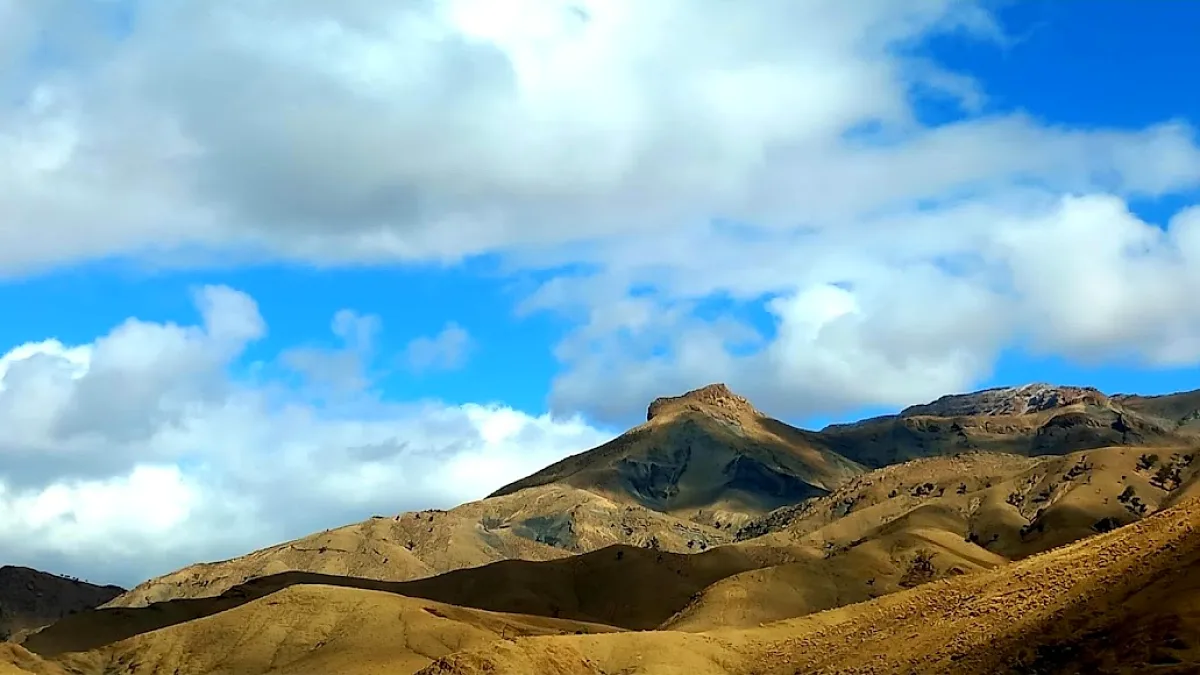
Four days surfing, then two days trekking from Imlil to the summit of Toubkal at 4,167 metres. Roughly nine hours of driving.
Physically the hardest of the four. Altitude rather than fitness is the limiting factor, and the summit sunrise is worth the pre-dawn start.
The number to compare them on
Hours in a vehicle. Two itineraries can list the same places and deliver them with eleven hours of driving or eighteen, depending on whether the route is a line or a loop. Ask before you book, and be suspicious of any answer that lists stops instead of hours.
A fifth option: two weeks, and why it changes everything
If you can take fourteen nights instead of seven, the arithmetic transforms. A week on the coast establishes actual surfing ability rather than a taste of it, and the second week can absorb the desert without stealing from the water.
The version we would build: seven nights surfing, four days inland to Erg Chebbi with a full desert day, then two or three nights in Marrakech or back on the coast. Roughly the same driving as a seven-day combined trip, spread across twice the time, with none of the compression.
It is also better value per day. Transfers, guide time and the fixed costs of an inland leg are the same whether you spend seven days or fourteen, so the daily rate falls.
The mistakes that ruin one-week itineraries
Booking a flight that lands at 11pm on day one and departs at 7am on day seven, then describing it as a week. That is five usable days.
Adding a third destination. Coast plus desert works. Coast plus desert plus Chefchaouen does not, and the blue city is eleven hours from Marrakech.
Ignoring which airport you leave from. An itinerary ending in Marrakech with a flight from Agadir costs you a day and €80.
Planning surf every day. Your shoulders will make the decision for you around day four, and an unplanned rest day is worse than a planned one.
Building the week around the swell
If you have flexible dates and surfing is the priority, watch the forecast a fortnight out and book into a rising period. This is a luxury most people do not have, and if you do have it, it is worth more than any other planning decision.
If your dates are fixed, structure the week to be robust instead: base yourself where multiple spot types are reachable, so a bad wind direction changes the drive rather than cancelling the day.
What each option costs, roughly
Coast only, seven nights: €270 to €500 for the camp, plus flights. The cheapest of the four and the one that produces the most surfing.
Surf and Sahara, seven nights: €615 upwards, including all transport and the desert camp.
Culture and coast: similar, with more of the money going to city accommodation and guiding.
Coast and Toubkal: similar again, with mountain guides and refuge nights replacing the desert camp.
None of these is dramatically cheaper than the others. Choose on how you want the week to feel rather than on price.
A day-by-day version of the surf and Sahara week
Day one: arrive on the coast, settle in, evening walk, group dinner.
Day two: two coached sessions, afternoon at the Agadir souk, video review after dinner.
Day three: morning yoga, one session, afternoon in Paradise Valley.
Day four: two sessions, then north to Imsouane for the long right-hander and lunch at the harbour.
Day five: early start inland, Tizi n'Tichka, Aït Ben Haddou, night near Ouarzazate.
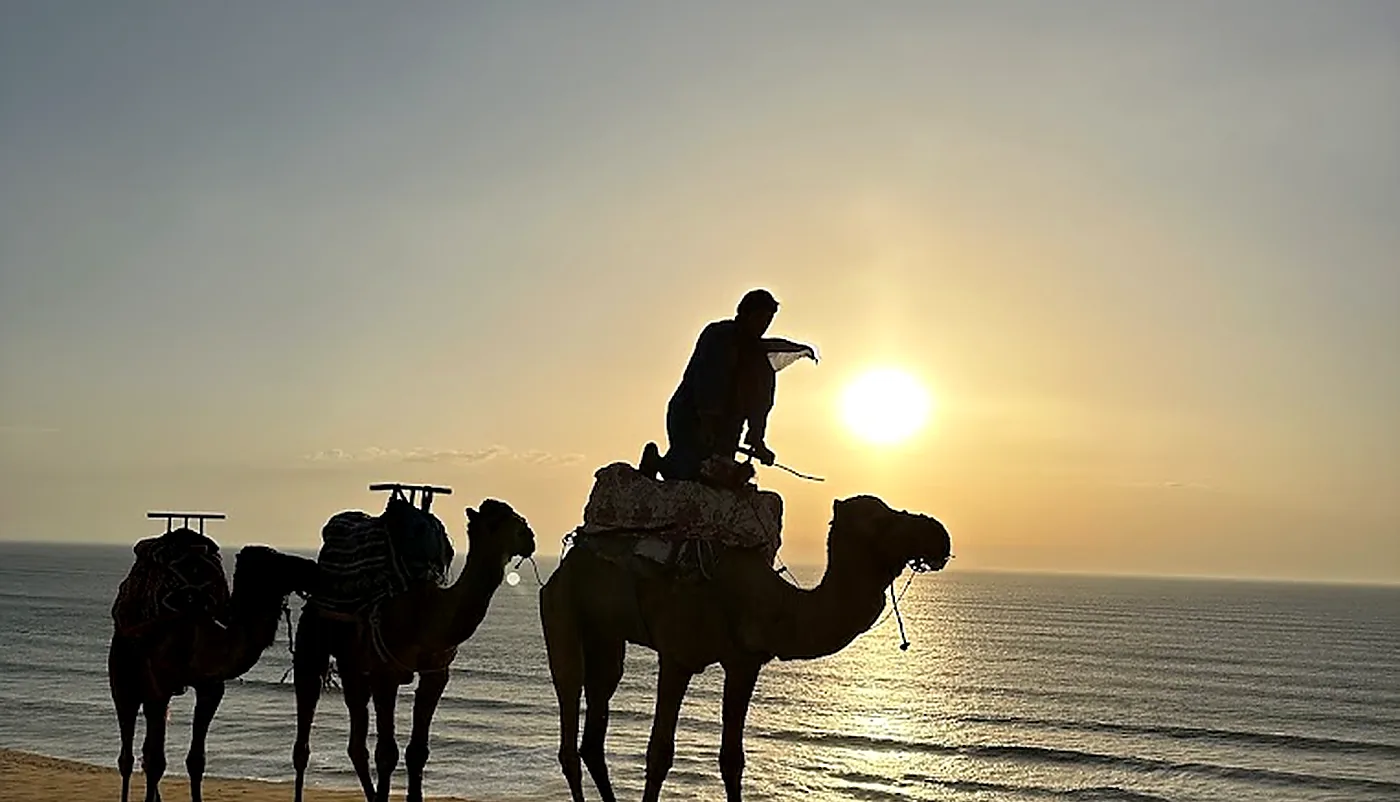
Day six: Todra gorge, then east to Erg Chebbi, camels in at sunset, camp.
Day seven: sunrise on the dunes, drive to Marrakech, trip ends.
That structure alternates effort and recovery deliberately: two hard surf days, an easy one, a hard one, then two travel days where your body does nothing.
Adapting it for different travellers
Travelling with children: cut the desert leg or swap it for Agafay, and add a second rest afternoon. The driving is what breaks family trips, not the surfing.
Travelling with a non-surfer: the same week works unchanged, since yoga, the valley, the market, Imsouane and the entire inland leg require no board.
Already an intermediate surfer: front-load the coast with five days rather than four and take the three-day desert crossing at the end, so you get more water time without adding nights.
Short on time: five nights, coast plus Agafay. It is the only version of a desert trip that works below six nights without becoming a driving holiday.
Booking order that avoids expensive mistakes
Confirm your camp or tour dates first. Then book flights, ideally open-jaw if your itinerary ends inland. Then insurance, checking that surfing is covered. Then any add-ons.
People routinely do this backwards — book cheap flights, then discover the dates do not fit a fixed Monday departure, then pay to change them. Two emails asking about availability first would have prevented it.
Leave the last night unbooked until you know your arrival time in Marrakech, and give yourself a buffer night before an early flight.
Choosing between the four
If you want to leave able to surf, take the coast-only week. Five unbroken days in the water is where beginners stop fighting the board, and no other version delivers that.
If you want to have seen Morocco, take surf and Sahara, and accept that two days are largely spent moving.
If this is a first trip and surfing is one interest among several, take culture and coast. You see Marrakech properly instead of arriving in it exhausted at the end of a long drive.
If you want the week to be physical, take coast and Toubkal.
Whichever you pick, compare operators on hours in a vehicle rather than on the list of places. Two itineraries naming identical stops can differ by seven hours of driving depending on whether the route is a line or a loop, and that difference is the whole texture of the week.
What to do with a spare day
Most weeks end up with one unplanned half-day, usually caused by wind, tide or tired shoulders. The good options are worth knowing in advance.
Imsouane for the long wave and lunch at the harbour, if you have not already been.
The Timlalin dunes north of Tamri, where the sand meets the Atlantic, for sandboarding, a camel ride or quads. An hour from the villages and completely different scenery.
Souk El Had in Agadir, one of the largest markets in the country, which absorbs a whole afternoon comfortably.
A hammam, which is the correct answer on day four when everything hurts.
Essaouira, if you have a full day rather than half — two and a half hours up the coast, walled, windy and excellent.
What not to do with a spare day: attempt a compressed desert trip. There is no version of the Sahara that fits into twenty-four hours from this coast.