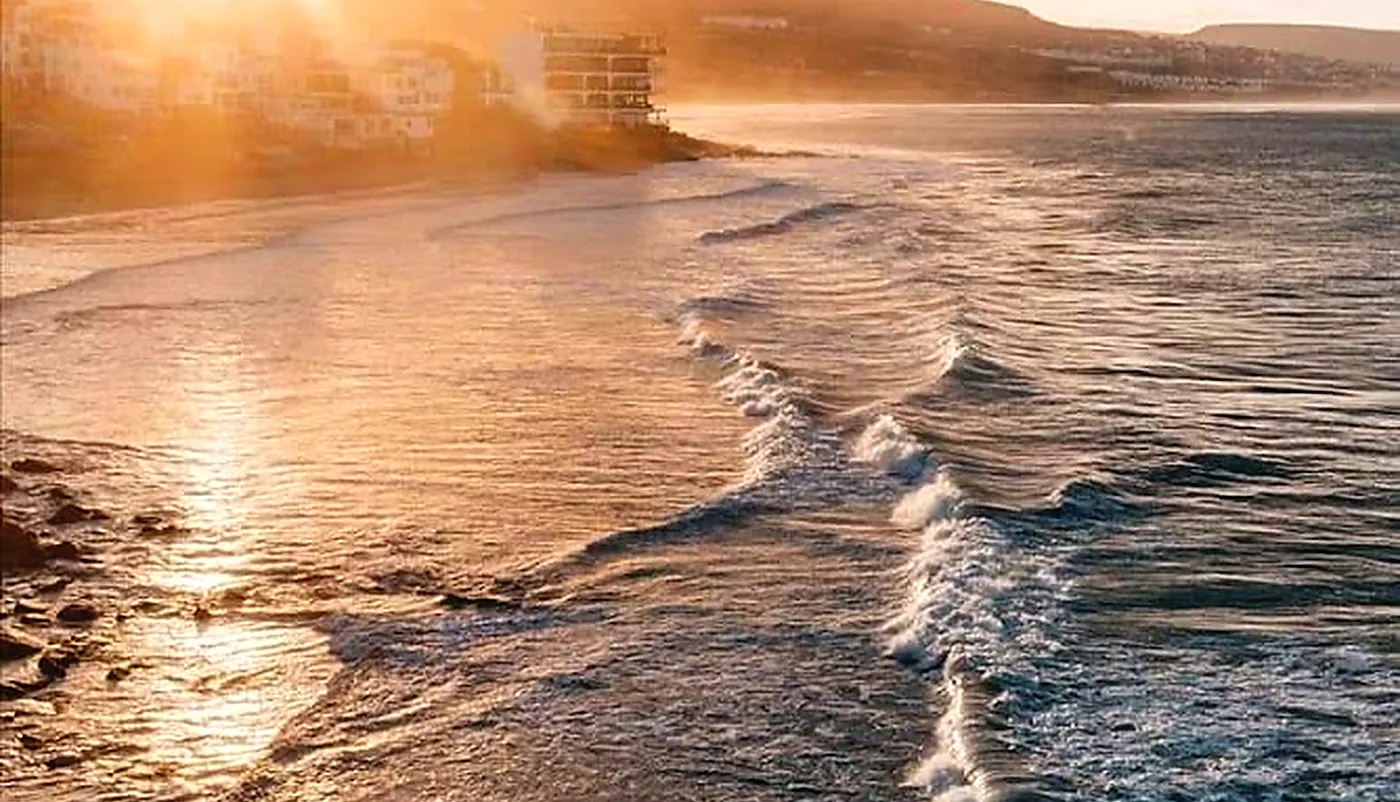
People book a desert night at the end of a surf week knowing it will be memorable and having no idea what the hours actually contain. Here they are.
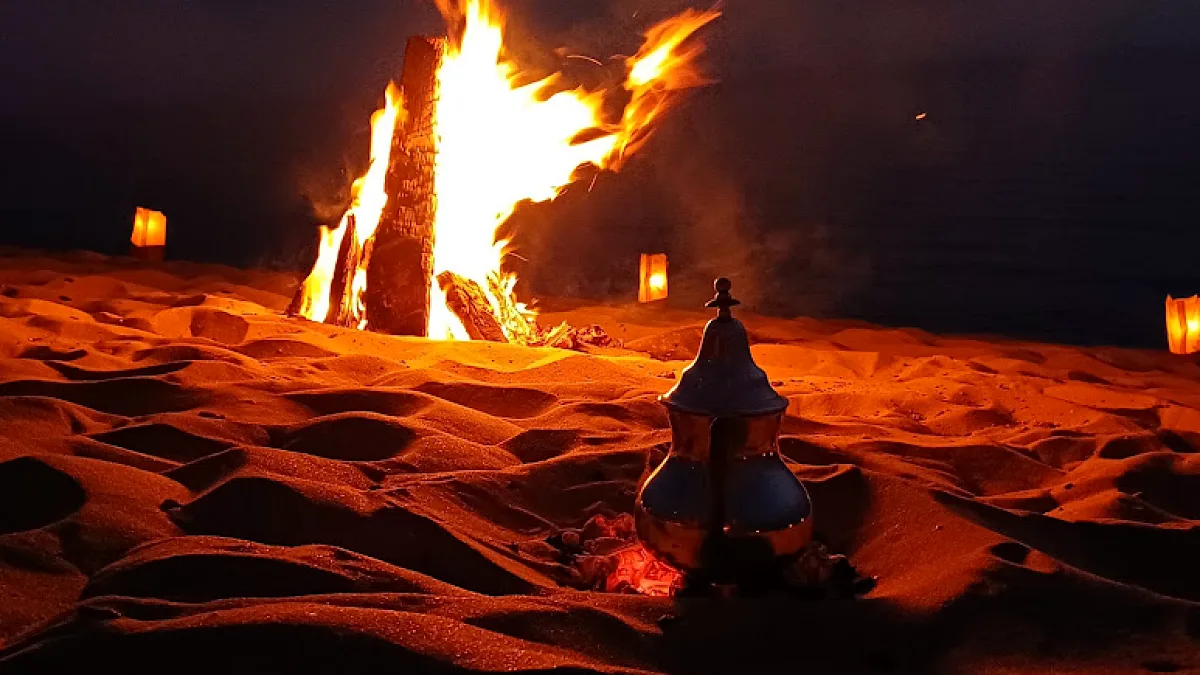
Coming straight off a week of surfing
You arrive in a particular state. A week of paddling leaves your shoulders tired in a way a camel saddle finds within ten minutes, and a week in saltwater leaves skin and hair ready for air that holds almost no moisture at all. Drink more than you think on the drive, and bring lip balm — it is the one item surfers reliably forget.
The other adjustment is the quiet. The coast is never silent; there is always swell working against rock somewhere. The erg is silent, and the first hour of that is strange before it becomes the part people remember.
Leave the board behind rather than carting it inland. Every operator running these trips from the coast stores boards for guests as a matter of course, but ask when you book rather than on the morning you leave.
Arrival, late afternoon
You reach the edge of the erg in the last few hours of daylight and transfer for the final stretch, either by camel or by 4x4. The camel option takes 45 to 90 minutes and is slower and less comfortable than you imagine — which is somehow the point.
Camp appears between dunes rather than on top of them, for shelter from wind. You get a tent, drop your bag, and go straight back out because the light is doing something remarkable.
Sunset and sandboarding
The hour before dark is the best of the trip. Sandboarding requires no skill and provides most of the entertainment; the climb back up the dune provides all of the exercise. The light changes minute by minute and everybody takes far too many photographs.
Dinner and the fire
Dinner is usually tagine and salads in a communal tent, followed by drumming around a fire. This is where the group actually becomes a group. It runs later than you expect and nobody minds.
The tent, honestly
Standards vary more here than in any other part of a Morocco trip. Basic means a mattress on a rug and a shared washblock. Standard means a real bed, heavy blankets and shared bathrooms in a solid block. Premium means an en-suite tent with plumbed hot water.
None of them are hotels. Power is solar or generator and often switched off at a set hour, so bring a power bank and a head torch.
The cold
Dry air holds no heat. A 35 °C afternoon becomes a 10 °C night, and December and January nights approach freezing. Blankets are provided, and a warm jacket is still the item people are most grateful for.
The sky, and the moon problem
Give your eyes twenty full minutes away from the fire before judging it. Then check the moon phase before you book: a full moon lights the dunes brightly enough to walk without a torch and washes out most stars, while a new moon gives you the Milky Way. Both are worth seeing and they are not the same night.
Sunrise
Early, non-negotiable, and better than sunset. Cooler air, harder light on the ridges, and almost nobody else awake. You do not get a second morning.
A realistic hour-by-hour of the night
Around four in the afternoon you reach the edge of the erg and transfer. By five you are moving into the dunes, and the light has already started to change. By six you are at camp with time to climb something before sunset.
Seven thirty, dinner. Nine, drums and fire. Around ten the group splits: some stay by the fire, some walk out into the dark. Eleven, most people are in tents. Somewhere around midnight one or two are still outside looking up, and those are the people who will talk about this night for years.
Five thirty, an alarm nobody wants. Six, on a crest with a blanket. Six twenty, the sun. Seven, breakfast. Eight thirty, driving.
What the tent is really like
Heavy canvas or wool, usually black or striped, pitched on a wooden or concrete base with rugs over it. A proper bed with several blankets in a standard camp; a mattress on the floor in a basic one. No heating in most camps, and none needed from March to November.
Sound carries. Canvas is not a wall, and a group laughing three tents away is audible. Ear plugs are worth the space they take.
Sand gets in regardless of what anyone does. Zip your bag, keep your camera in a zip-lock, and accept that you will be finding sand in things a fortnight after you get home.
Bathrooms, power and water
Basic camps have a shared washblock with cold or lukewarm water. Standard camps have shared bathrooms in a solid block with hot water at limited hours. Premium camps have plumbed en-suites.
Power is solar, generator, or both, and it is usually switched off between about eleven at night and dawn. Charging points, where they exist, are shared and slow. Bring a power bank and charge it during the day in the vehicle.
Water is trucked in. That is worth knowing when you are deciding how long to run a shower.
Food, and eating in a desert camp
Dinner is typically harira or a vegetable soup, then a tagine with bread, then fruit and mint tea. It is cooked on gas in a kitchen tent by people who have done it hundreds of times, and it is generally better than the setting would suggest.
Vegetarians are catered for easily; vegans and coeliacs should give notice at booking rather than on the day, because the camp shops in Rissani or Erfoud before you arrive, not after.
Alcohol is not served at most desert camps. Some tolerate you bringing your own; ask rather than assume, and if in doubt, do not.
The part people are unprepared for
How quiet it is. Away from the camp, with no wind, the Sahara produces a level of silence most people have never experienced — no traffic, no aircraft, no insects, no leaves. Several guests a year describe it as unsettling before they describe it as beautiful.
Walk fifteen minutes out from the fire, sit down, and stay there for ten minutes. That is the thing you came for, and almost nobody does it because the fire is where the people are.
Travelling with children
Children generally love the dunes and dislike the drive, and both are worth planning for. Break the journey with more stops than an adult group would want, and bring entertainment for the hours between them.
Camel rides suit children from around six, often sharing with a parent. Sandboarding is a straightforward hit at any age and will occupy them for as long as you let it.
Nights are the consideration. A tent in the dark with no electricity is either an adventure or frightening depending on the child, and a head torch of their own resolves most of it.
Ask about family tents and about earlier dinner service. Most camps accommodate both if asked at booking rather than on arrival.
Accessibility and mobility
Desert camps are not built for limited mobility, and honest operators say so. Sand is difficult to walk on, camps are reached by camel or 4x4 over dunes, and bathrooms are often across open sand from the tents.
That said, a great deal is possible with planning. A 4x4 transfer replaces the camel. Camps at the edge of the erg reduce the distance over sand. Some camps have tents close to facilities and will allocate them if asked.
Tell the operator specifically what you need rather than asking whether it is accessible. A specific question gets a useful answer; a general one gets reassurance.
The environmental side, briefly
Desert camps truck in water and truck out waste, and the density of camps around the accessible edge of Erg Chebbi has grown substantially. That has consequences for a fragile environment.
Practical things that help: use water as if it arrived on a lorry, because it did. Take your rubbish back out with you rather than leaving it for the camp to handle. Stay on established tracks rather than driving across untouched dune.
Ask your operator where waste goes and where staff come from. Camps that employ people from Merzouga, Hassi Labied and Khamlia rather than importing seasonal staff put money into the communities that live with the consequences of the industry.
Getting the most from one night
Climb something. The dune behind camp looks small and is not, and the view from the top at sunset is the reason you drove all day.
Walk out into the dark, alone or with one other person, at least fifteen minutes from the fire. Sit down. Stay ten minutes. That silence is the thing people describe years later, and almost nobody does it because the fire is where the people are.
Set the alarm for sunrise, and get up when it goes off. You will not get a second morning, and the erg changing colour in eight minutes is better than the sunset.
Talk to the camp staff. Many are from Merzouga, Hassi Labied or Khamlia and have spent their lives in this landscape. A conversation over mint tea is worth more than any guided commentary.
And put the phone away for an hour. The photographs will be the same in sixty minutes; the experience will not.